
Fluffy Buttery White Loaf From the Best Bread Machine
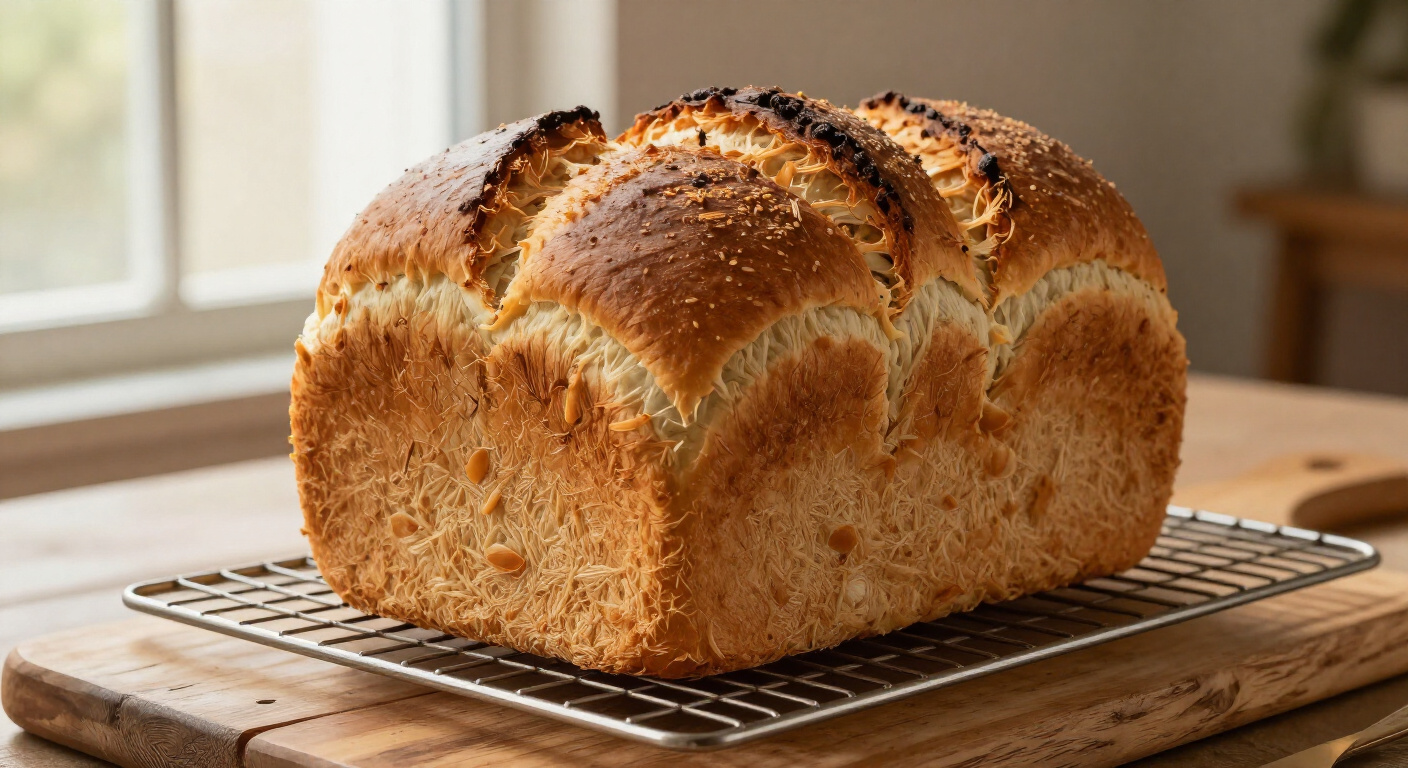
The best bread machine turns out a golden, pillowy loaf in about 4¼ hours, so compare top picks for beginners and used buys before you bake.
The best bread machine turns a pantry dough into a fragrant, golden loaf in roughly 4¼ hours. Set it, walk away, and let the machine knead and rise for you. Ideal for lazy weekends and anxious first-time bakers.
Why This Recipe Works
• Layering keeps yeast dry until mixing starts: The yeast stays dry in its well until mixing begins, so it wakes gently, not all at once.
• Softened butter tenderizes the crumb throughout: Cut into small pieces, the fat coats gluten strands, so the crumb stays soft and velvety.
• Sugar fuels yeast and browns the crust: The yeast gets quick food, and Maillard browning gives the top its rich, even color.
• Wire rack cooling prevents a soggy base: Cooling on a rack lets steam escape from the bottom, so the crust firms instead of going damp.
Ingredients You'll Need
Lukewarm Water: This is the liquid that wakes the yeast and hydrates the flour, so it should sit near 110°F (43°C), like a comfortable bath. Too hot and you'll kill the yeast, too cold and the dough sulks. Milk warmed to the same temperature works in a pinch and gives a softer, slightly richer crumb.
Bread Flour: Bread flour is the backbone here, with extra protein building the gluten that holds the rise. My first loaves were bricks, mostly because I packed the flour in. Spoon it into the cup and level it off. All-purpose flour is the best substitute; the crumb turns a little softer and the loaf rises a bit lower.
Granulated Sugar: Two tablespoons feed the yeast and help the crust reach that rich, even golden color. It also softens the crumb, so each slice feels tender instead of tough. Honey or maple syrup can stand in, but expect a slightly darker crust that browns faster.
Unsalted Butter: Softened and cut into small pieces, butter coats the gluten strands so the crumb stays velvety. Unsalted keeps the salt level under your control, since the recipe already calls for a teaspoon. Neutral oil is the easiest stand-in; use about 1¾ tablespoons, and the loaf will taste a little leaner.
Kosher Salt: Salt tightens the gluten, slows the yeast down just enough, and makes the flavor taste like itself. Kosher grains are coarse, so they dissolve evenly and never taste harsh. Fine table salt works, but use about three-quarters of a teaspoon because it packs denser.
Instant or Bread Machine Yeast: This one packet, about 7 grams, is the living engine that makes the dough rise. It's made to mix straight in with the dry ingredients, so the machine can handle the rest. Active dry yeast works in the same amount; it rises a touch slower, so give it a little extra time.


How to Make It (Step by Step)
The machine does everything in one pan: it mixes, kneads, rises, and bakes your loaf without any hand-kneading. Stick to the layering order, press start, and even a nervous first-timer ends up with a pillowy, golden loaf.

- Pour the lukewarm water into the bread machine pan until it lies smooth and even across the base, 1-2 minutes at about 110°F (43°C).

- Spoon 3 cups (about 375 g) bread flour, spooned and leveled, over the water until it fully covers the surface with no wet patches, 2-3 minutes at room temperature, about 70°F (21°C).

- Scatter 2 tablespoons (25 g) granulated sugar and 2 tablespoons unsalted butter, softened and cut into small pieces, over the flour until the butter pieces sit separately and look soft, 1-2 minutes at about 70°F (21°C).

- Sprinkle 1 teaspoon kosher salt into one corner of the flour until it sits apart from the sugar and butter, about 1 minute at about 70°F (21°C).

- Make a small well in the flour and spoon in 2 ¼ teaspoons (1 packet, about 7 g) instant or bread machine yeast until it sits as a dry mound in the well, about 1 minute at about 70°F (21°C).

- Select the basic setting and start the machine until the dough forms a smooth, slightly tacky ball that springs back when pressed, 15-20 minutes at about 70°F (21°C).

- Let the machine rise the dough until it doubles and domes above the rim of the pan, 60-90 minutes at about 80°F (27°C).

- Let the bake cycle run until the top and sides turn deep golden-brown and the loaf sounds hollow when tapped, 50-60 minutes at about 350°F (175°C).

- Lift the loaf out of the pan onto a wire rack and cool until the crust feels firm, 60-90 minutes at room temperature, about 70°F (21°C).

Recipe Notes
• Storage: Keep the loaf wrapped at room temperature for up to three days. The fridge dries it out fast, so skip it. Freeze sliced portions for up to three months. Reheat slices in a toaster or a 300°F (150°C) oven for about five minutes.
• Key substitution: Out of bread flour? Use 3 cups all-purpose flour plus 3 tablespoons vital wheat gluten. The loaf rises a little shorter, but the crumb stays springy and velvety.
• Make-ahead tip: Bag the flour, sugar, and salt the night before, each in its own labeled bag. Keep the yeast sealed in a jar. Your morning setup takes two minutes, and the layering stays intact.
• Common mistake: Scooping flour straight from the bag packs it tight. Packed flour gives you a dense, gummy brick. Spoon it into the cup, then level it with a knife.
Serving size: 1 portion · Calories: 180 · Total Fat: 4g · Saturated Fat: 2g · Carbs: 30g · Fiber: 1g · Sugar: 2g · Protein: 5g · Sodium: 230mg
Tips and Tricks
- Equipment: Use the machine's removable pan: It keeps the water, flour, and yeast in clean layers. When buying used, check the nonstick coating and kneading paddle first.

- Temperature precision: Keep the water near 110°F (43°C): Water much hotter can kill the yeast. Water that's too cool makes the dough rise slowly and stay dense.
- Common mistake: Lifting the lid during the bake: Opening the lid drops the heat, and the middle of the loaf can sink. Let the cycle finish before you peek.
- Flavour upgrade: Brush the warm crust with melted butter: A thin coat softens the crust and adds a buttery shine. It's optional, so skip it if you prefer a plain top.
- Texture tip: Cool the loaf on a wire rack: Air flows underneath, so the crust firms instead of turning soft and damp. Wait until the crust feels firm before slicing.

Frequently Asked Questions
Can I substitute the bread flour or butter in this bread machine loaf for a vegan or lower-fat version?
Swap the butter for 2 tablespoons refined coconut oil or vegan butter, and use plant milk in place of water only if warmed to about 110°F. For the flour, keep bread flour, since all-purpose flour needs 3 tablespoons vital wheat gluten added per 3 cups.
Can I freeze the whole cooled loaf instead of slicing it first?
Yes, wrap the completely cooled loaf tightly in plastic wrap, then foil, and freeze it for up to two months. Thaw it wrapped at room temperature for 3 hours, then warm it in a 350°F (175°C) oven for 10 minutes to refresh the crust.
Why does my loaf sink in the middle after the bake cycle finishes?
Dough that is too wet or too rich will collapse, so check the kneading ball at 15 minutes: it should be smooth and slightly tacky, not sticky or slack. Add flour one teaspoon at a time if it clings to the pan.
What to Serve With This Loaf
- Lemon-Herb Arugula Salad: Peppery greens tossed in sharp lemon juice cut cleanly through the buttery richness of the loaf.
- Quick Pickled Cucumber and Red Onion: Crisp, tangy slices add a snappy contrast to every soft, pillowy bite.
- Roasted Tomato Soup: Bright, slightly acidic tomato makes a warm, velvety dip that balances the loaf's buttery sweetness.
- Crisp Apple Slices with Sharp Cheddar: Tart, juicy apple and aged cheddar bring crunch and bite against the tender crumb.

Fluffy Buttery White Loaf From the Best Bread Machine
Bread / American
- Prep
- 15 min
- Cook
- 4 h
- Total
- 4 h 15 min
- Servings
- 10
- Calories
- 180 kcal
Ingredients
- 1 cup (240 ml) lukewarm water, about 110°F (43°C)
- 3 cups (about 375 g) bread flour, spooned and leveled
- 2 tablespoons (25 g) granulated sugar
- 2 tablespoons unsalted butter, softened and cut into small pieces
- 1 teaspoon kosher salt
- 2 ¼ teaspoons (1 packet, about 7 g) instant or bread machine yeast
Instructions
- Pour the lukewarm water into the bread machine pan until it lies smooth and even across the base, 1-2 minutes at about 110°F (43°C).
- Spoon 3 cups (about 375 g) bread flour, spooned and leveled, over the water until it fully covers the surface with no wet patches, 2-3 minutes at room temperature, about 70°F (21°C).
- Scatter 2 tablespoons (25 g) granulated sugar and 2 tablespoons unsalted butter, softened and cut into small pieces, over the flour until the butter pieces sit separately and look soft, 1-2 minutes at about 70°F (21°C).
- Sprinkle 1 teaspoon kosher salt into one corner of the flour until it sits apart from the sugar and butter, about 1 minute at about 70°F (21°C).
- Make a small well in the flour and spoon in 2 ¼ teaspoons (1 packet, about 7 g) instant or bread machine yeast until it sits as a dry mound in the well, about 1 minute at about 70°F (21°C).
- Select the basic setting and start the machine until the dough forms a smooth, slightly tacky ball that springs back when pressed, 15-20 minutes at about 70°F (21°C).
- Let the machine rise the dough until it doubles and domes above the rim of the pan, 60-90 minutes at about 80°F (27°C).
- Let the bake cycle run until the top and sides turn deep golden-brown and the loaf sounds hollow when tapped, 50-60 minutes at about 350°F (175°C).
- Lift the loaf out of the pan onto a wire rack and cool until the crust feels firm, 60-90 minutes at room temperature, about 70°F (21°C).
Share this article
About the author
Theo Lindqvist
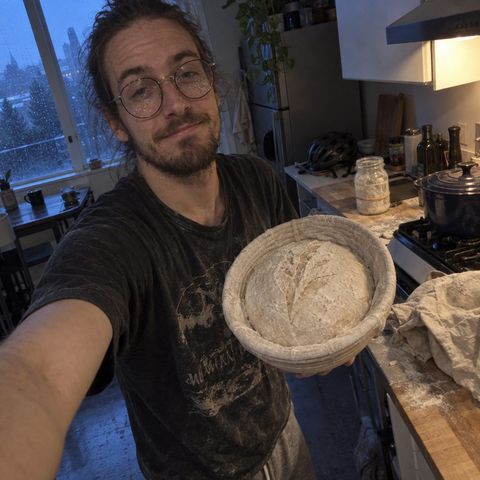
Theo bakes at five in the morning because anxiety wakes him anyway, and kneading is the one thing that makes his hands stop shaking. His first loaves were bricks and he cried over them. Now he scores a boule in the blue dark and feels, for an hour, completely at peace.