Tender Beer Bread PNG Art and an Easy Three-Ingredient Loaf
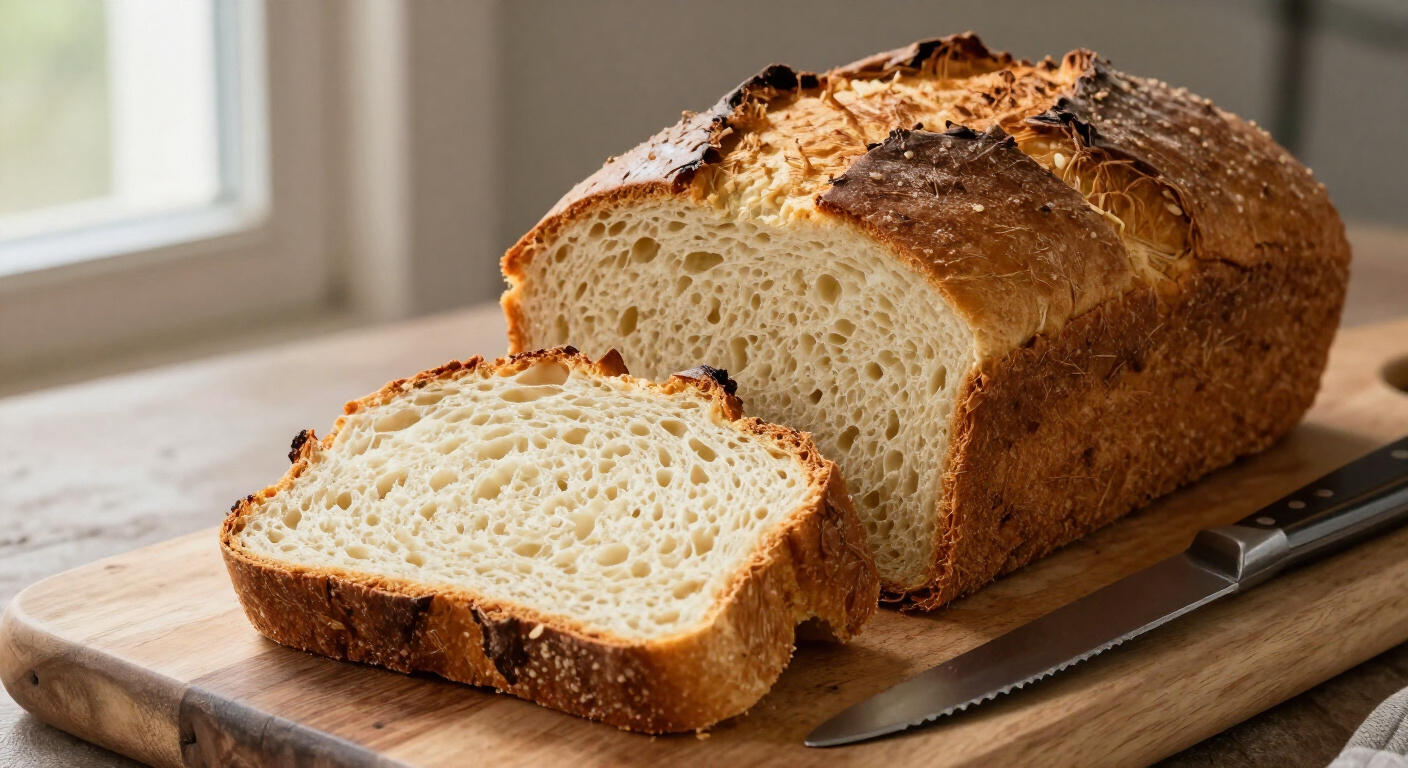
Bread png art meets a real loaf: this golden, tender three-ingredient beer bread bakes in 75 minutes with no kneading. Grab the cute graphics and recipe.
Like a bread png come to life, this golden, fragrant beer loaf bakes up tender in 75 minutes. It needs no kneading and no yeast, so it's perfect for slow weekend mornings or cozy soup nights.
Spooned flour and a barely stirred, lumpy batter keep the crumb tender, while the lager's bubbles help the self-rising flour lift the loaf into a domed, golden-brown crust.
Ingredients You'll Need
Self-Rising Flour: This is all-purpose flour with baking powder and salt already blended in. It does all the lifting here, so no yeast and no kneading. My first loaves were bricks because I packed the flour, so spoon it in and level it for a soft, tender crumb. No self-rising flour? Whisk 3 cups all-purpose flour with 4½ teaspoons baking powder and ¾ teaspoon fine salt.
Granulated Sugar: Plain white sugar adds a gentle sweetness that balances the beer's malty edge. It also helps the crust turn deep golden-brown and fragrant in the oven. Light brown sugar works well as a swap. It gives a slightly caramel, cozy note.
Beer (Light Lager): A room-temperature light lager brings bubbles, moisture and a mellow, bready flavor. Those bubbles help the flour lift the loaf into a high, domed top. Cold beer slows that rise, so let the bottle sit out first. Non-alcoholic lager is the closest substitute. Plain club soda works too, though the flavor will be milder.


How to Make It (Step by Step)
This loaf comes together in one bowl: whisk, stir in the lager, pour into the pan, bake until golden and fragrant.
Even if your first loaves were bricks like mine, this one forgives shaky hands and turns out tender every time.

- Heat the oven to 375°F / 190°C, then whisk the spooned self-rising flour and sugar in a large bowl until evenly blended and powdery, 1-2 minutes at room temperature (70°F / 21°C). Light hands here. This is where a tender loaf begins.

- Pour in the room-temperature lager and stir gently with a wooden spoon until a thick, shaggy batter forms with no dry streaks, about 1 minute at 70°F / 21°C. Lumps are fine. Overmixing makes bricks, and I've cried over enough of those.

- Scrape the batter into a loaf pan and nudge it level with a spatula until it sits evenly into the corners, 1-2 minutes at 70°F / 21°C. It'll look rough and craggy. That's perfect.

- Bake on the center rack until the top is domed, deep golden-brown and fragrant, 40-45 minutes at 375°F / 190°C. Tap the crust. It should sound hollow and feel firm to the touch.

- Rest the loaf in its pan on a wire rack until the edges pull away from the sides, about 10 minutes at room temperature (70°F / 21°C). Breathe. The kitchen smells like a bakery now.

- Turn the loaf out onto the rack and cool until the crust feels firm and the bread is just warm, 20-30 minutes at 70°F / 21°C. Cutting too early turns the crumb gummy.

- Slice the loaf into 10 pieces with a serrated knife until each slice shows a soft, tender crumb, 2-3 minutes at room temperature (70°F / 21°C). Use a gentle sawing motion. Then eat one warm, standing up, in the blue morning quiet.

Wrapped slices keep 4 days chilled or 3 months frozen; toast to reheat. Swap lager for sparkling cider, jar the flour-sugar mix 3 days ahead, and don't open the oven early.
Serving size: 1 portion · Calories: 160 · Total Fat: 0.4g · Saturated Fat: 0.1g · Carbs: 34g · Fiber: 1g · Sugar: 5g · Protein: 4g · Sodium: 470mg
Tips and Tricks
- Equipment: Use a light-coloured metal 9x5 loaf pan: Metal heats fast and evenly, so the sides set golden instead of scorched. Dark pans brown the edges before the center catches up. A sturdy spatula helps you nudge that craggy batter right into the corners.

- Temperature precision: Let the lager reach a true 70°F / 21°C: Cold beer straight from the fridge slows the self-rising flour's lift. Your loaf bakes up squat and dense. Set the bottle on the counter while the oven hits 375°F / 190°C.
- Common mistake: Scooping the flour straight from the bag: Dipping the cup in packs it tight, sometimes adding a full extra spoonful per cup. That's how my early bricks happened. Spoon it in gently, then level it with a knife.
- Flavour upgrade: Brush the warm crust with melted butter: Do it right after you turn the loaf out onto the rack. It soaks in fast and smells like a bakery at dawn. The top turns glossy and rich, and the lager's malty sweetness really sings.
- Texture tip: Cool on the rack, then saw gently: Steam needs 20-30 minutes to escape, or the crumb goes gummy. Once the bread is just warm, use a serrated knife and let the teeth do the work. Each slice stays soft, tender and springy.

Frequently Asked Questions
Can I make this three-ingredient beer bread gluten-free without it turning dense?
Yes, use 3 cups (375 g) gluten-free 1-to-1 flour whisked with 1 tablespoon baking powder and ¾ teaspoon salt, plus one 12-ounce gluten-free beer. Regular lager is brewed from barley, so it isn't safe for celiac bakers.
How do I store and rewarm a whole beer bread loaf for later?
Keep the unsliced loaf wrapped in a clean towel on the counter for up to 2 days, or freeze it whole in foil and a zip bag for up to 2 months. Thaw it overnight in the fridge, then warm it in its foil at 350°F / 175°C for 15-20 minutes.
Why is my beer bread gummy and dense in the center after baking?
Usually the batter was overmixed or the loaf was sliced too soon, so stir only until no dry streaks remain and cool it 20-30 minutes on the rack. Bake the full 40-45 minutes at 375°F / 190°C, until the domed top is deep golden-brown and sounds hollow when tapped.
What to Serve With This
- Creamy Tomato Basil Soup: The bright, velvety soup cuts through the beer bread's sweetness, and a craggy golden crust is made for dunking.
- Smoky Beef Chili: Rich, spicy and hearty, it meets its match in each soft, tender slice that soaks up the fragrant sauce.
- Sharp Cheddar Beer Cheese Dip: Its tangy, silky texture against the firm, deep golden-brown crust is pure cozy-night comfort.
- Crisp Apple Cabbage Slaw: Cool, crunchy and vinegary, it lifts every warm, mellow bite like a breath of fresh morning air.

Tender Beer Bread PNG Art and an Easy Three-Ingredient Loaf
Side Dish / American
- Prep
- 30 min
- Cook
- 45 min
- Total
- 1 h 15 min
- Servings
- 10
- Calories
- 160 kcal
Ingredients
- 3 cups (375 g) self-rising flour, spooned and leveled so the loaf stays tender, not brick-heavy
- ¼ cup (50 g) granulated sugar
- 1 (12-ounce) bottle beer, room temperature, a light lager for a mellow, golden loaf
Instructions
- Heat the oven to 375°F / 190°C, then whisk the spooned self-rising flour and sugar in a large bowl until evenly blended and powdery, 1-2 minutes at room temperature (70°F / 21°C). Light hands here. This is where a tender loaf begins.
- Pour in the room-temperature lager and stir gently with a wooden spoon until a thick, shaggy batter forms with no dry streaks, about 1 minute at 70°F / 21°C. Lumps are fine. Overmixing makes bricks, and I've cried over enough of those.
- Scrape the batter into a loaf pan and nudge it level with a spatula until it sits evenly into the corners, 1-2 minutes at 70°F / 21°C. It'll look rough and craggy. That's perfect.
- Bake on the center rack until the top is domed, deep golden-brown and fragrant, 40-45 minutes at 375°F / 190°C. Tap the crust. It should sound hollow and feel firm to the touch.
- Rest the loaf in its pan on a wire rack until the edges pull away from the sides, about 10 minutes at room temperature (70°F / 21°C). Breathe. The kitchen smells like a bakery now.
- Turn the loaf out onto the rack and cool until the crust feels firm and the bread is just warm, 20-30 minutes at 70°F / 21°C. Cutting too early turns the crumb gummy.
- Slice the loaf into 10 pieces with a serrated knife until each slice shows a soft, tender crumb, 2-3 minutes at room temperature (70°F / 21°C). Use a gentle sawing motion. Then eat one warm, standing up, in the blue morning quiet.
Share this article
About the author
Theo Lindqvist
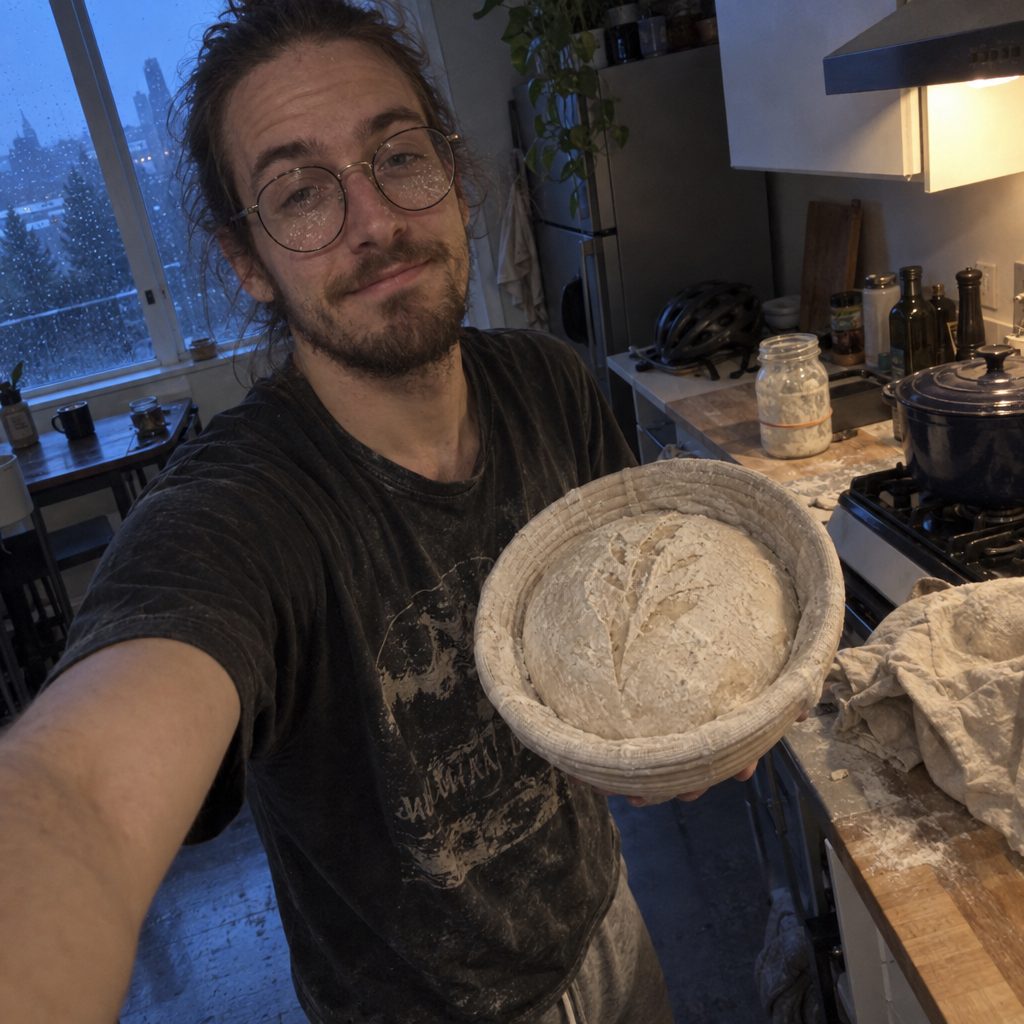
Theo bakes at five in the morning because anxiety wakes him anyway, and kneading is the one thing that makes his hands stop shaking. His first loaves were bricks and he cried over them. Now he scores a boule in the blue dark and feels, for an hour, completely at peace.