Fluffy Skillet English Muffin Recipe With Nooks and Crannies
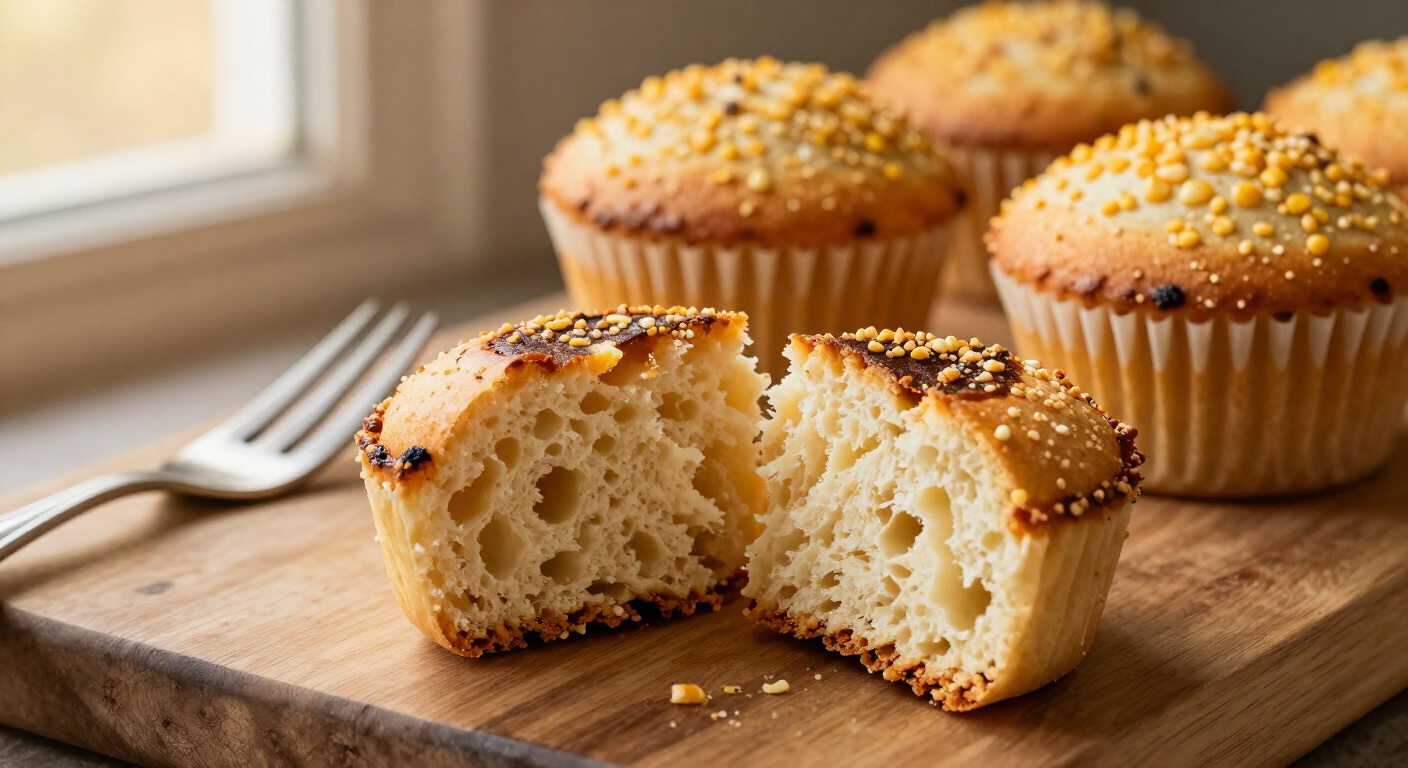
This english muffin recipe makes 12 golden, cornmeal-crusted rounds in a cast-iron skillet in 40 minutes, with craggy nooks and crannies for butter.
This english muffin recipe turns out twelve golden, cornmeal-dusted rounds that sizzle in cast iron and split into nooks and crannies in about 40 hands-on minutes. No oven or rings needed, just one skillet, so lazy weekends feel special.
Bread flour builds the chewy gluten that traps big bubbles, while a slow, low-heat skillet sets each crust golden-brown before the soft center finishes cooking through. Fork-splitting keeps those airy pockets intact.
Ingredients You'll Need
Whole Milk: Whole milk brings richness and a tender, pillowy crumb to these rounds. Warm it to about 110°F so it wakes the yeast without hurting it. No milk? Use all water or unsweetened oat milk for a lighter, slightly chewier muffin.
Water: Water loosens the dough so steam can puff those famous nooks and crannies. Warming it with the milk gives the yeast a cozy bath. Any clean tap water works, but filtered water helps if yours tastes strongly of chlorine.
Unsalted Butter: Melted butter softens the gluten and adds a sweet, golden richness. Cool it slightly first so it doesn't cook the egg. Swap in the same amount of neutral oil for a dairy-free batch.
Granulated Sugar: Just a spoonful feeds the yeast and encourages that deep golden-brown crust. It won't make the muffins sweet. Honey or maple syrup works one-for-one in a pinch.
Active Dry Yeast: These tiny granules make the creamy foam that tells you the dough is alive. They give the muffins their rise and airy pockets. Instant yeast works too, and you can skip waiting for the foam.
Large Egg: A lightly beaten egg adds structure, color and a soft, custardy tenderness. Bring it to room temperature so it doesn't chill your warm liquids. Leave it out and add 2 extra tablespoons of milk instead.
Bread Flour: High-protein bread flour builds the stretchy gluten that traps big bubbles. That's where the chew comes from. All-purpose flour works, but expect a softer, slightly less holey crumb.
Fine Sea Salt: Salt sharpens every buttery, toasty flavor and keeps the yeast in check. Without it, the muffins taste flat. Use table salt at a scant teaspoon, since it's saltier by volume.
Cornmeal: Cornmeal gives that classic crunchy, sandy bottom and keeps the rounds from sticking. It toasts beautifully in the hot skillet. Semolina is the best swap, with a finer, nuttier crunch.
Neutral Oil: A thin film of oil keeps the cast iron slick and helps the crust brown evenly. Use only a little, or the muffins will fry. Melted butter or ghee works if you watch the heat closely.


How to Make It (Step by Step)
Everything starts and ends in one cast-iron skillet: wake the yeast, knead a soft dough, then griddle the rounds low and golden.
Even if your first loaves were bricks like mine, these forgiving muffins puff up warm and fragrant on the first try.

- Warm the milk and water together in a cast-iron skillet over low heat until it feels cozy on your wrist, 2-3 minutes at 110°F / 43°C. Pour it into a large mixing bowl.

- Whisk in the sugar, yeast, melted butter and beaten egg. Let it sit until a creamy foam blooms on top, 5-10 minutes at 110°F / 43°C. That foam means your yeast is alive and happy.

- Stir in the bread flour and fine sea salt with a wooden spoon until a shaggy, sticky dough forms with no dry streaks, 2-3 minutes at room temperature, 75°F / 24°C.

- Knead on a lightly floured counter until the dough turns smooth, soft and slightly tacky, 8-10 minutes at 75°F / 24°C. A gentle poke should spring back. This is where my hands finally go quiet.

- Cover the bowl and let the dough rise until doubled and pillowy, 1 to 1½ hours at 75°F / 24°C. A light poke should leave a slow-filling dent.

- Roll the dough ¾ inch thick and cut twelve 3-inch rounds. Rest them on a cornmeal-dusted sheet, tops dusted too, until puffy, 20-30 minutes at 75°F / 24°C.

- Wipe the cast-iron skillet with a thin film of oil and preheat until it shimmers faintly, 5-7 minutes over medium-low heat, about 325°F / 163°C.

- Cook the rounds in batches, cornmeal side down, until the bottoms turn deep golden brown, 6-7 minutes at 325°F / 163°C. Give them room to puff.

- Flip and cook the second side until golden brown and the sides feel firm, 6-7 minutes at 325°F / 163°C. They'll sound hollow when tapped.

- Cool on a wire rack until barely warm, 15-20 minutes at 75°F / 24°C. Then split them with a fork, never a knife. Hello, nooks and crannies!

These keep three days airtight or freeze split for three months, toasting golden straight from frozen. Shape rounds the night before and chill them covered, and swap all-purpose flour if needed, expecting softer chew.
Serving size: 1 portion · Calories: 182 · Total Fat: 4.2g · Saturated Fat: 1.9g · Carbs: 30g · Fiber: 1.2g · Sugar: 2.1g · Protein: 6.1g · Sodium: 260mg
Tips and Tricks
- Equipment: Reach for a heavy cast-iron skillet: Thick iron holds steady, even heat for the whole batch. Thin pans spike hot and scorch the cornmeal before the centers set. Mine's a battered 12-inch, and it never lets me down.

- Temperature precision: Hold the skillet at 325°F / 163°C: Medium-low feels painfully slow, I know. But any hotter and you get burnt bottoms with gummy middles. Look for a faint shimmer in the oil, not smoke.
- Common mistake: Don't keep adding flour while kneading: Sticky dough tempts you to sprinkle and sprinkle. Resist it. A slightly tacky dough makes the big bubbles; a dry one bakes up tight and bready.
- Flavour upgrade: Finish with salted honey butter: Whip soft butter with a drizzle of honey and a pinch of flaky salt. Spread it on hot, toasted halves. It melts straight into every crevice, sweet and fragrant.
- Texture tip: Split with a fork, always: Poke a fork all around the middle, then gently pull the halves apart. A knife flattens everything. The fork tears open those craggy nooks that crisp up beautifully in the toaster.

Frequently Asked Questions
Can I make this english muffin recipe dairy-free or without milk?
Yes, swap the 1 cup whole milk for 1 cup unsweetened oat milk or simply 1 cup more warm water, and replace the 2 tablespoons butter with 2 tablespoons olive oil. Water-only muffins come out a touch leaner and crispier, but the nooks and crannies stay just as deep.
Should I refrigerate leftover English muffins, and how do I reheat them whole?
Skip the fridge unless your kitchen is humid, since chilling stales them faster; if you must, cap it at 5 days. Reheat whole in a dry, lidded cast-iron skillet over low heat, 3-4 minutes per side, then fork-split while warm.
Why are my English muffins burnt outside but gummy and raw inside?
Your skillet is too hot, so the crust browns before the center sets; drop to medium-low, about 325°F, and give each side the full 6-7 minutes. They're done when the sides feel firm and the muffins sound hollow when tapped.
What to Serve With This
- Soft Scrambled Eggs: Silky, buttery curds sink into every craggy nook, a creamy contrast to the crisp, cornmeal-dusted crust.
- Crispy Smoked Bacon: Salty, shattering strips play against the muffin's soft, chewy crumb and mild, toasty sweetness.
- Blistered Cherry Tomatoes: Their jammy, tangy bursts cut through the butter and wake up a sleepy five a.m. plate.
- Fresh Berry Salad With Lime: Juicy, bright berries with a squeeze of lime bring cool sweetness to the warm, golden rounds.

Fluffy Skillet English Muffin Recipe With Nooks and Crannies
Breakfast / British
- Prep
- 25 min
- Cook
- 15 min
- Total
- 40 min
- Servings
- 12
- Calories
- 160 kcal
Ingredients
- 1 cup whole milk, warmed to about 110°F
- ½ cup water, warmed to about 110°F
- 2 tablespoons unsalted butter, melted and cooled slightly
- 1 tablespoon granulated sugar
- 2¼ teaspoons active dry yeast (one ¼-ounce packet)
- 1 large egg, at room temperature and lightly beaten
- 3½ cups bread flour, spooned and leveled, plus extra for dusting
- 1¼ teaspoons fine sea salt
- ¼ cup cornmeal or semolina, for dusting
- 1 tablespoon neutral oil, for wiping the skillet
Instructions
- Warm the milk and water together in a cast-iron skillet over low heat until it feels cozy on your wrist, 2-3 minutes at 110°F / 43°C. Pour it into a large mixing bowl.
- Whisk in the sugar, yeast, melted butter and beaten egg. Let it sit until a creamy foam blooms on top, 5-10 minutes at 110°F / 43°C. That foam means your yeast is alive and happy.
- Stir in the bread flour and fine sea salt with a wooden spoon until a shaggy, sticky dough forms with no dry streaks, 2-3 minutes at room temperature, 75°F / 24°C.
- Knead on a lightly floured counter until the dough turns smooth, soft and slightly tacky, 8-10 minutes at 75°F / 24°C. A gentle poke should spring back. This is where my hands finally go quiet.
- Cover the bowl and let the dough rise until doubled and pillowy, 1 to 1½ hours at 75°F / 24°C. A light poke should leave a slow-filling dent.
- Roll the dough ¾ inch thick and cut twelve 3-inch rounds. Rest them on a cornmeal-dusted sheet, tops dusted too, until puffy, 20-30 minutes at 75°F / 24°C.
- Wipe the cast-iron skillet with a thin film of oil and preheat until it shimmers faintly, 5-7 minutes over medium-low heat, about 325°F / 163°C.
- Cook the rounds in batches, cornmeal side down, until the bottoms turn deep golden brown, 6-7 minutes at 325°F / 163°C. Give them room to puff.
- Flip and cook the second side until golden brown and the sides feel firm, 6-7 minutes at 325°F / 163°C. They'll sound hollow when tapped.
- Cool on a wire rack until barely warm, 15-20 minutes at 75°F / 24°C. Then split them with a fork, never a knife. Hello, nooks and crannies!
Share this article
About the author
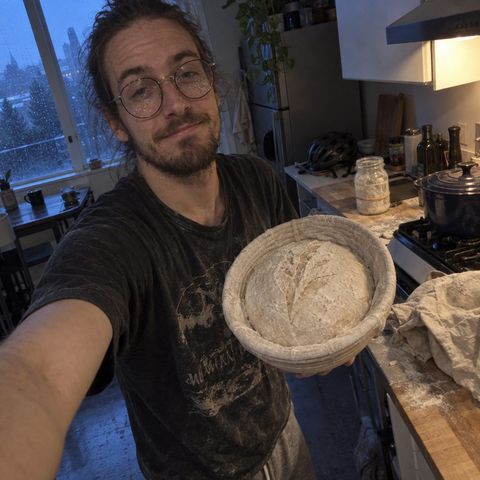
Theo Lindqvist
Theo bakes at five in the morning because anxiety wakes him anyway, and kneading is the one thing that makes his hands stop shaking. His first loaves were bricks and he cried over them. Now he scores a boule in the blue dark and feels, for an hour, completely at peace.