Easy Four-Ingredient Buttermilk Irish Soda Bread Recipe
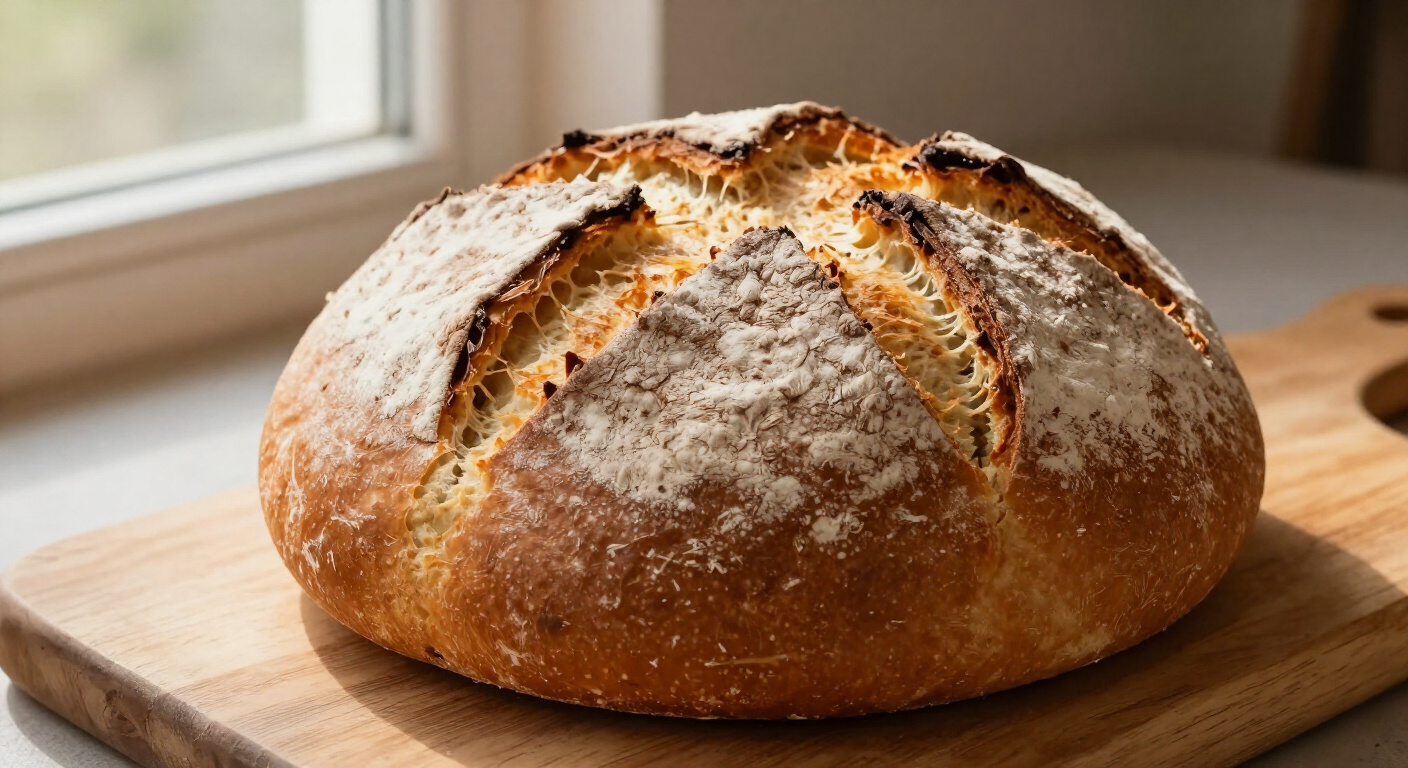
This Irish soda bread recipe needs just four ingredients and 50 minutes for a crackly golden crust and soft, tangy crumb. No kneading, so bake it today.
This irish soda bread recipe bakes a crackly golden crust and soft, tangy crumb in 50 minutes, no kneading. Bake it at dawn for slow Sunday breakfasts, or tear it warm beside a bowl of stew.
Cold buttermilk's acid hits the baking soda and fizzes out carbon dioxide right away. A light stir and a blazing 450°F oven trap those bubbles before they escape.
Ingredients You'll Need
All-Purpose Flour: This is the whole backbone of the loaf, and you'll need a little extra for dusting the board and baking sheet. Plain flour's moderate protein gives a tender, soft crumb instead of a chewy one. If you can find it, soft Irish-style or pastry flour is the best swap. It bakes even more delicate.
Baking Soda: This is your only lift. No yeast, no waiting. Sift it first, because one hidden lump leaves a bitter, yellowish speck in the crumb. There's no true substitute. In a pinch, use 1 tablespoon of baking powder, but expect a milder, less craggy rise.
Fine Sea Salt: A single teaspoon wakes up the wheat and balances buttermilk's tang. Without it, the bread tastes flat and oddly sweet. My first salt-free loaf tasted like cardboard. Fine table salt works too. Use a scant teaspoon, since it's a touch saltier by volume.
Buttermilk: Cold, thick and pleasantly sour, this is what makes it soda bread. Its acid wakes the baking soda, and its tang flavors every crumb. Keep it cold so the fizz waits for the oven. No buttermilk? Stir 1 tablespoon of lemon juice into 1¾ cups of milk. Let it sit 10 minutes until slightly curdled.


How to Make It (Step by Step)
This loaf is a whisk, a quick stir, a gentle pat and a deep cross before it bakes golden in a blazing oven. My first ones were bricks, so trust me: if I can manage it at five in the morning, you will too.

- Preheat the oven and lightly dust a large baking sheet with flour until a thin, even white film covers it, 15-20 minutes at 450°F / 230°C. A properly hot oven gives you that big, fast rise.

- Whisk the flour, sifted baking soda and fine sea salt in a large bowl until evenly blended with no white streaks, about 30 seconds, while the oven heats to 450°F / 230°C. Lift the whisk high to aerate it.

- Make a deep well in the center and pour in the cold buttermilk until it pools in a glossy puddle, about 10 seconds, with the oven holding at 450°F / 230°C. Work quickly from here on.

- Stir with a wooden spoon in wide circles until a soft, shaggy, sticky dough forms, 30-60 seconds, with the oven at 450°F / 230°C. Stop the moment it holds together. Overmixing makes a brick. Trust me.

- Tip the dough onto a floured board and pat it gently into a round about 2 inches (5 cm) high until it just holds its shape, 20-30 seconds, with the oven at 450°F / 230°C. Gentle hands, no kneading.

- Move the round onto the baking sheet and cut a deep cross across the top until the four sections gently part, about 15 seconds, with the oven at 450°F / 230°C. Cut nearly two-thirds of the way down.

- Bake for 15 minutes at 450°F / 230°C, then drop to 400°F / 200°C. Bake 20-25 minutes more until deep golden-brown and hollow-sounding when you tap the bottom.

- Cool the loaf on a wire rack until the crust settles and the base feels just warm, 20-30 minutes at room temperature, around 70°F / 21°C. The crumb keeps setting as it cools, so wait before slicing.

Wrapped, it keeps two days, staling faster in the fridge, or freeze slices three months and toast them golden. Swap buttermilk for lemon-soured milk, whisk dry ingredients the night before, and weigh flour, never scoop.
Serving size: 1 portion · Calories: 230 · Total Fat: 1g · Saturated Fat: 0.4g · Carbs: 48g · Fiber: 2g · Sugar: 3g · Protein: 8g · Sodium: 500mg
Tips and Tricks
- Equipment: Use a heavy, light-colored baking sheet: A thick aluminum sheet spreads heat gently, so the base browns without scorching. Dark, thin pans burn the bottom before the center sets. A thin, even flour film keeps the loaf from sticking.

- Temperature precision: Check the oven with a thermometer: Many ovens run 15-25°F cool, and soda bread needs a true 450°F / 230°C. Hang a cheap oven thermometer and trust it over the dial. That first blast sets the rise before the bubbles escape. Then drop to 400°F so the crust deepens without burning.
- Common mistake: Cutting the cross too shallow: A timid slash just seals shut in the heat. The center then stays dense and gummy. Use a sharp, floured knife and cut nearly two-thirds down. I was scared to do it at first, so go bold. The four sections should visibly part.

- Flavour upgrade: Add a spoonful of caraway seeds: Whisk 1-2 teaspoons into the flour before the buttermilk goes in. They bring a warm, faintly anise perfume that blooms in the hot oven. Every slice tastes like an Irish farmhouse kitchen. It's optional, but it's my favourite five-a.m. treat.
- Texture tip: Choose your crust while it cools: For a crackly, shatter-crisp crust, cool the loaf bare on the wire rack. For a soft, tender crust, wrap it in a clean tea towel straight from the oven. The trapped steam softens the outside beautifully. Either way, the crumb stays soft and tangy inside.
Frequently Asked Questions
Can I make Irish soda bread gluten-free or dairy-free without ruining it?
For gluten-free, swap in 500 g of a cup-for-cup gluten-free blend containing xanthan gum, and expect a denser, more crumbly loaf. For dairy-free, stir 1 tablespoon apple cider vinegar into 400 ml unsweetened soy or oat milk and let it sit 10 minutes to curdle.
Can I freeze a whole baked loaf, and how do I revive it?
Wrap the cooled whole loaf in plastic then foil and freeze up to 2 months, thaw it wrapped overnight at room temperature, then sprinkle with water and warm at 350°F / 180°C for 10 minutes. Never refrigerate the mixed dough, since the soda fizzes immediately and must bake straightaway.
Why is my Irish soda bread dense and gummy in the middle?
Usually the dough was overmixed or the loaf came out too early, so stir only until shaggy and bake until the bottom sounds hollow when tapped. If the crust browns before the center sets, tent it loosely with foil for the last 10 minutes at 400°F / 200°C.
What to Serve With This
- Beef and Guinness Stew: Its dark, glossy gravy soaks right into the soft, tangy crumb, and the crackly crust holds up beautifully.
- Creamy Potato and Leek Soup: The velvety, buttery soup softens each torn chunk, while the crust adds a welcome crunch.
- Smoked Salmon with Crème Fraîche: Silky, salty salmon and cool crème fraîche brighten the bread's mellow buttermilk tang.
- Cucumber and Dill Salad: Crisp, vinegary cucumber cuts through the hearty loaf with a fresh, bright snap.

Easy Four-Ingredient Buttermilk Irish Soda Bread Recipe
Side Dish / Irish
- Prep
- 10 min
- Cook
- 40 min
- Total
- 50 min
- Servings
- 8
- Calories
- 230 kcal
Ingredients
- 4 cups (500 g) all-purpose flour, plus a little extra for dusting
- 1 teaspoon baking soda, sifted to break up any lumps
- 1 teaspoon fine sea salt
- 1¾ cups (400 ml) buttermilk, cold
Instructions
- Preheat the oven and lightly dust a large baking sheet with flour until a thin, even white film covers it, 15-20 minutes at 450°F / 230°C. A properly hot oven gives you that big, fast rise.
- Whisk the flour, sifted baking soda and fine sea salt in a large bowl until evenly blended with no white streaks, about 30 seconds, while the oven heats to 450°F / 230°C. Lift the whisk high to aerate it.
- Make a deep well in the center and pour in the cold buttermilk until it pools in a glossy puddle, about 10 seconds, with the oven holding at 450°F / 230°C. Work quickly from here on.
- Stir with a wooden spoon in wide circles until a soft, shaggy, sticky dough forms, 30-60 seconds, with the oven at 450°F / 230°C. Stop the moment it holds together. Overmixing makes a brick. Trust me.
- Tip the dough onto a floured board and pat it gently into a round about 2 inches (5 cm) high until it just holds its shape, 20-30 seconds, with the oven at 450°F / 230°C. Gentle hands, no kneading.
- Move the round onto the baking sheet and cut a deep cross across the top until the four sections gently part, about 15 seconds, with the oven at 450°F / 230°C. Cut nearly two-thirds of the way down.
- Bake for 15 minutes at 450°F / 230°C, then drop to 400°F / 200°C. Bake 20-25 minutes more until deep golden-brown and hollow-sounding when you tap the bottom.
- Cool the loaf on a wire rack until the crust settles and the base feels just warm, 20-30 minutes at room temperature, around 70°F / 21°C. The crumb keeps setting as it cools, so wait before slicing.
Share this article
About the author
Theo Lindqvist
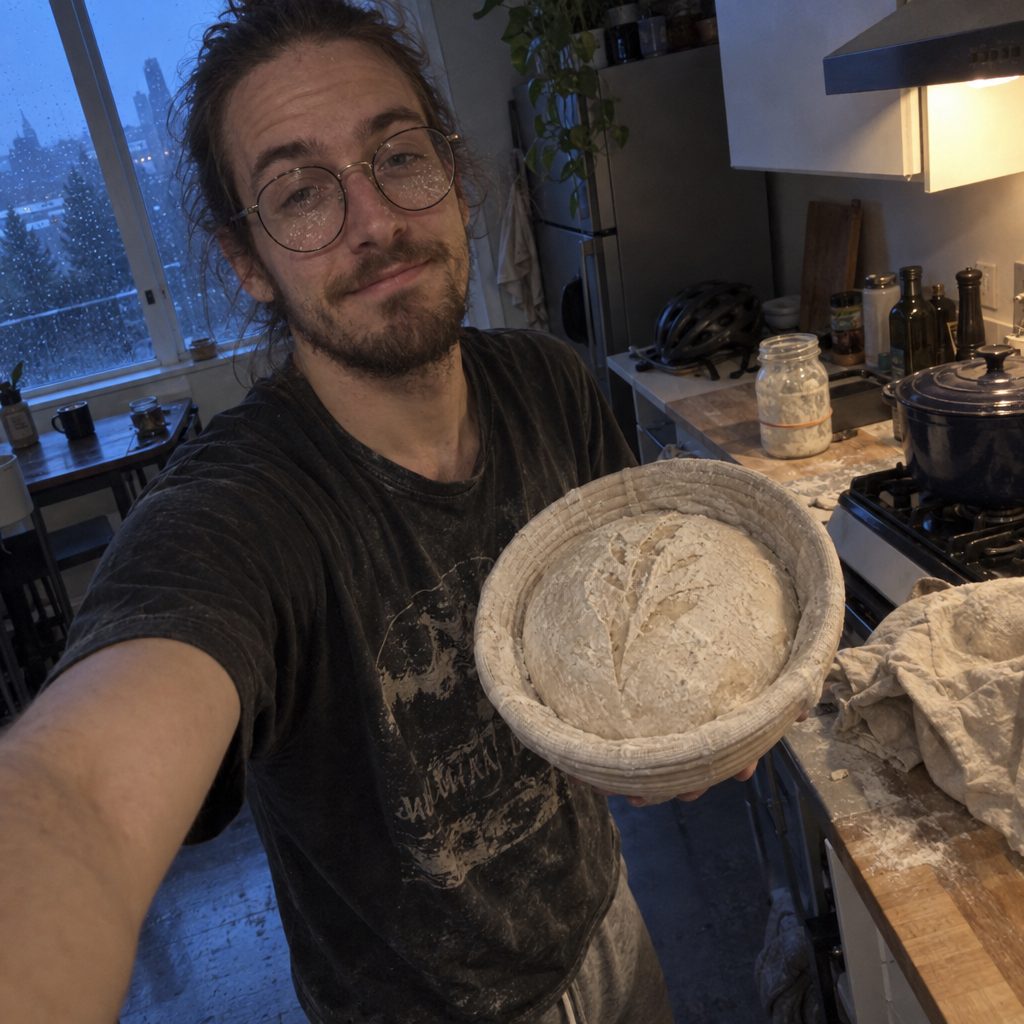
Theo bakes at five in the morning because anxiety wakes him anyway, and kneading is the one thing that makes his hands stop shaking. His first loaves were bricks and he cried over them. Now he scores a boule in the blue dark and feels, for an hour, completely at peace.