Crackly Golden Four-Ingredient Boule for Our Daily Bread
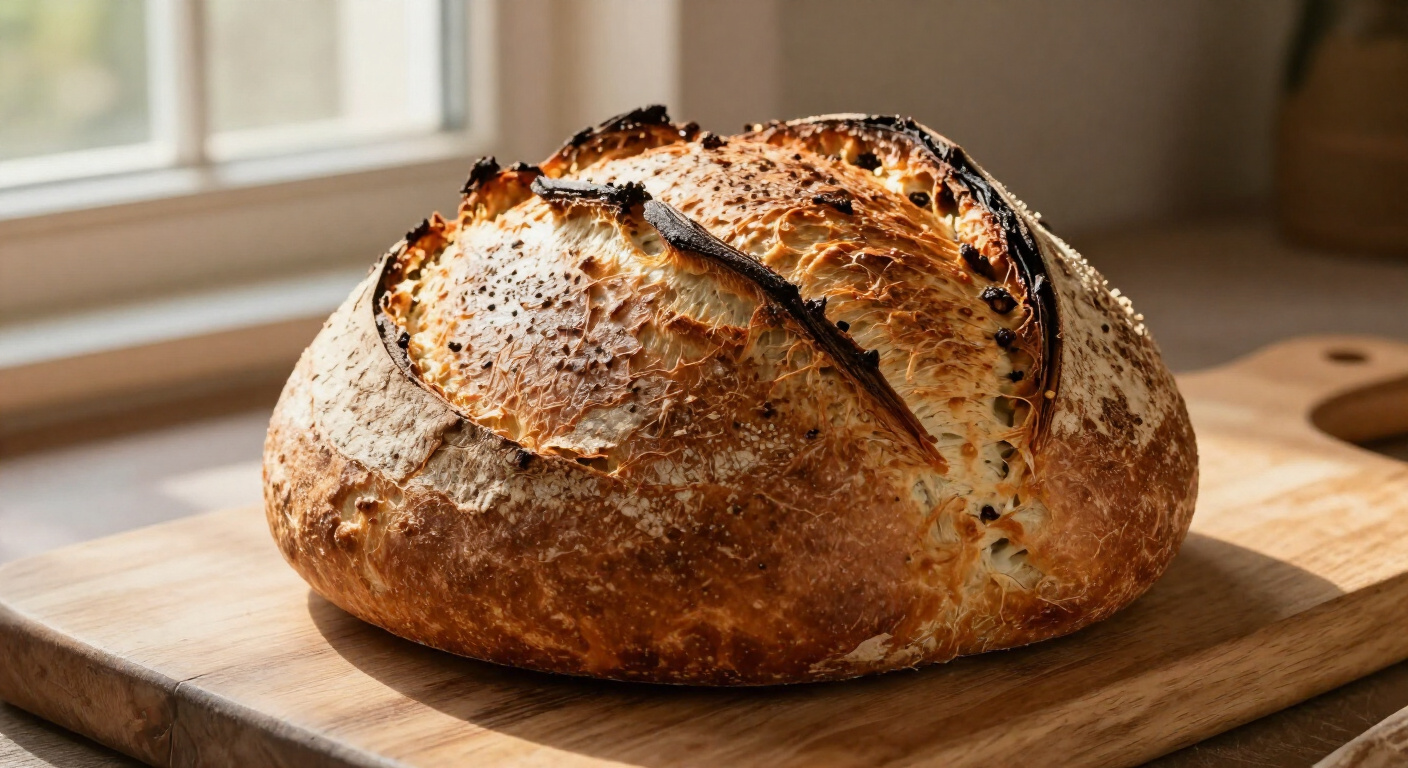
Our daily bread, baked in 75 minutes: a crackly, golden Dutch oven boule from four pantry staples, plus the meaning behind the Lord's Prayer line.
Our daily bread starts here: 75 minutes of hands-on and oven time for a crackly, golden-brown boule with a soft, steamy crumb. Four pantry staples and a hot Dutch oven make it easy, perfect for quiet weekend mornings.
Ten minutes of rhythmic kneading builds stretchy gluten that traps every bubble, while the lidded bake holds in steam so your boule springs tall before its crust turns golden.
Ingredients You'll Need
Bread Flour: This is a high-protein wheat flour, and it's the backbone of our daily bread. All that protein builds stretchy gluten, so your boule rises tall and chewy instead of slumping. All-purpose flour works in a pinch, but expect a softer, slightly flatter loaf.
Lukewarm Water: Plain tap water, warmed to about 95°F, should feel like a cozy bath on your wrist. It wakes the yeast gently and hydrates the flour into that shaggy, sticky dough. If your water is heavily chlorinated, use filtered or bottled water instead.
Instant Yeast: These tiny dry granules mix straight into the flour without any proofing fuss. They give you a puffy, doubled dough in about an hour, and they're very forgiving at five in the morning. Active dry yeast swaps in one-to-one, though the first rise may take a little longer.
Fine Sea Salt: Salt is quiet, but it's everything here. It deepens that toasty, golden-brown crust flavor and firms up the gluten so the dough holds its shape. Table salt works, but use a scant amount because it tastes saltier by volume.


How to Make It (Step by Step)
This loaf is mostly patience: mix a shaggy dough, knead it smooth, let it rise, then bake it in a blazing Dutch oven.
Even if your first loaves were bricks like mine, you'll pull out a crackly, golden-brown boule here.


- Whisk the bread flour, instant yeast and fine sea salt in a large bowl until evenly blended and dusty-soft, about 30 seconds at room temperature (70°F / 21°C). This is where our daily bread begins. Breathe here.

- Pour in the lukewarm water and stir with a wooden spoon until a shaggy, sticky dough forms, 1-2 minutes at 95°F / 35°C. The water should feel warm as a bath. Lumpy is perfect.

- Knead the dough on a lightly floured counter until smooth, elastic and springy to the touch, 8-10 minutes at room temperature (70°F / 21°C). Let your hands find a rhythm. Push, fold, turn.

- Let the dough rise in a clean bowl under a kitchen towel until doubled and puffy, 1-1½ hours at 75°F / 24°C. Go make coffee. It's doing the work now.

- Shape the dough into a tight round boule and proof it on parchment until slightly puffed, 30-45 minutes at 75°F / 24°C. Tuck the edges under for a taut, smooth skin.

- Preheat a lidded cast-iron Dutch oven inside your oven until it's blazing hot, 30 minutes at 450°F / 230°C. That stored heat gives the crust its crackle.

- Score the top of the boule with one confident curved slash until the cut opens slightly, about 10 seconds at room temperature (70°F / 21°C). Don't hesitate. A quick, deep cut blooms best.

- Bake the boule covered in the Dutch oven until it springs up and smells toasty, 25 minutes at 450°F / 230°C. Lower it in by the parchment. Keep the lid on.

- Uncover and bake until the crust is deep golden-brown and sounds hollow when tapped, 15-20 minutes at 450°F / 230°C. Go darker than you think. Flavor lives there.

- Cool the loaf on a wire rack until the crust crackles and the bottom feels just warm, about 1 hour at room temperature (70°F / 21°C). Listen closely. That singing crust means you did it.

Skip the fridge: keep it towel-wrapped two days, or freeze slices and re-crisp at 350°F. All-purpose flour swaps fine, dough can chill overnight, and slicing it hot leaves gummy crumb.
Serving size: 1 portion · Calories: 180 · Total Fat: 1g · Saturated Fat: 0.1g · Carbs: 36g · Fiber: 1.3g · Sugar: 0.2g · Protein: 6g · Sodium: 460mg
Tips and Tricks
- Equipment: Use a lidded cast-iron Dutch oven: Its heavy walls store blazing heat and trap steam around the boule. That steam lets the loaf spring tall before the crust sets. Lower it in by the parchment, and save your fingertips.

- Temperature precision: Keep your water at 95°F: It should feel warm as a bath on your wrist, never hot. Too cool and the rise drags. Too hot and you stress the yeast before it starts.
- Common mistake: Flouring the counter too heavily: Sticky dough tempts you to keep dusting. Resist it. Extra flour makes a dense, dry crumb. Use a light dusting and let rhythm do the rest. Push, fold, turn.
- Flavour upgrade: Fold in fresh rosemary: Knead a tablespoon of finely chopped rosemary into the dough during the last minute. The kitchen fills with a piney, fragrant warmth. It makes our daily bread feel like a small celebration.
- Texture tip: Bake darker than feels safe: Pull the loaf only when the crust is deep golden-brown and sounds hollow when tapped. Then let it cool on a rack. That's when the crust crackles and sings.

Frequently Asked Questions
Can I make our daily bread with whole wheat flour instead of bread flour?
Yes, swap up to 1½ cups (190 g) of the bread flour for whole wheat flour and add 2 tablespoons extra lukewarm water, since bran absorbs more. A fully whole wheat boule also works with 1⅔ cups (400 ml) water, but expect a denser, nuttier loaf.
Can I freeze a whole baked boule to serve on a later day?
Yes, wrap the fully cooled loaf in plastic and foil and freeze it whole for up to 3 months. Thaw it wrapped on the counter for 3-4 hours, then bake unwrapped directly on the oven rack at 375°F / 190°C for 10-12 minutes until the crust crackles again.
Why did my boule spread flat instead of rising tall in the oven?
The dough likely overproofed or was shaped too loosely, so tuck the edges under firmly for a taut skin and bake when a gently pressed fingertip dent springs back slowly. If the dent stays put, it's overproofed, so shorten the final proof to about 30 minutes next time.
What to Serve With This
- Creamy Tomato Soup: A velvety, tangy bowl turns that crackly golden crust into the best dipper you'll ever hold.
- Soft-Scrambled Eggs with Chives: Silky, buttery curds sit gently against the toasty crust, and that's my favorite five a.m. breakfast.
- Whipped Ricotta with Lemon Zest: A cloud-soft, bright spread melts into the warm crumb and wakes up every bite.
- Lemony Arugula Salad: Peppery greens and a sharp lemon dressing cut through all that chewy, golden richness.

Crackly Golden Four-Ingredient Boule for Our Daily Bread
Breakfast / American
- Prep
- 30 min
- Cook
- 45 min
- Total
- 1 h 15 min
- Servings
- 10
- Calories
- 180 kcal
Ingredients
- 4 cups (500 g) bread flour, spooned and leveled
- 1½ cups (360 ml) lukewarm water, about 95°F and warm as a bath
- 1 teaspoon instant yeast
- 2 teaspoons fine sea salt
Instructions
- Whisk the bread flour, instant yeast and fine sea salt in a large bowl until evenly blended and dusty-soft, about 30 seconds at room temperature (70°F / 21°C). This is where our daily bread begins. Breathe here.
- Pour in the lukewarm water and stir with a wooden spoon until a shaggy, sticky dough forms, 1-2 minutes at 95°F / 35°C. The water should feel warm as a bath. Lumpy is perfect.
- Knead the dough on a lightly floured counter until smooth, elastic and springy to the touch, 8-10 minutes at room temperature (70°F / 21°C). Let your hands find a rhythm. Push, fold, turn.
- Let the dough rise in a clean bowl under a kitchen towel until doubled and puffy, 1-1½ hours at 75°F / 24°C. Go make coffee. It's doing the work now.
- Shape the dough into a tight round boule and proof it on parchment until slightly puffed, 30-45 minutes at 75°F / 24°C. Tuck the edges under for a taut, smooth skin.
- Preheat a lidded cast-iron Dutch oven inside your oven until it's blazing hot, 30 minutes at 450°F / 230°C. That stored heat gives the crust its crackle.
- Score the top of the boule with one confident curved slash until the cut opens slightly, about 10 seconds at room temperature (70°F / 21°C). Don't hesitate. A quick, deep cut blooms best.
- Bake the boule covered in the Dutch oven until it springs up and smells toasty, 25 minutes at 450°F / 230°C. Lower it in by the parchment. Keep the lid on.
- Uncover and bake until the crust is deep golden-brown and sounds hollow when tapped, 15-20 minutes at 450°F / 230°C. Go darker than you think. Flavor lives there.
- Cool the loaf on a wire rack until the crust crackles and the bottom feels just warm, about 1 hour at room temperature (70°F / 21°C). Listen closely. That singing crust means you did it.
Share this article
About the author
Theo Lindqvist
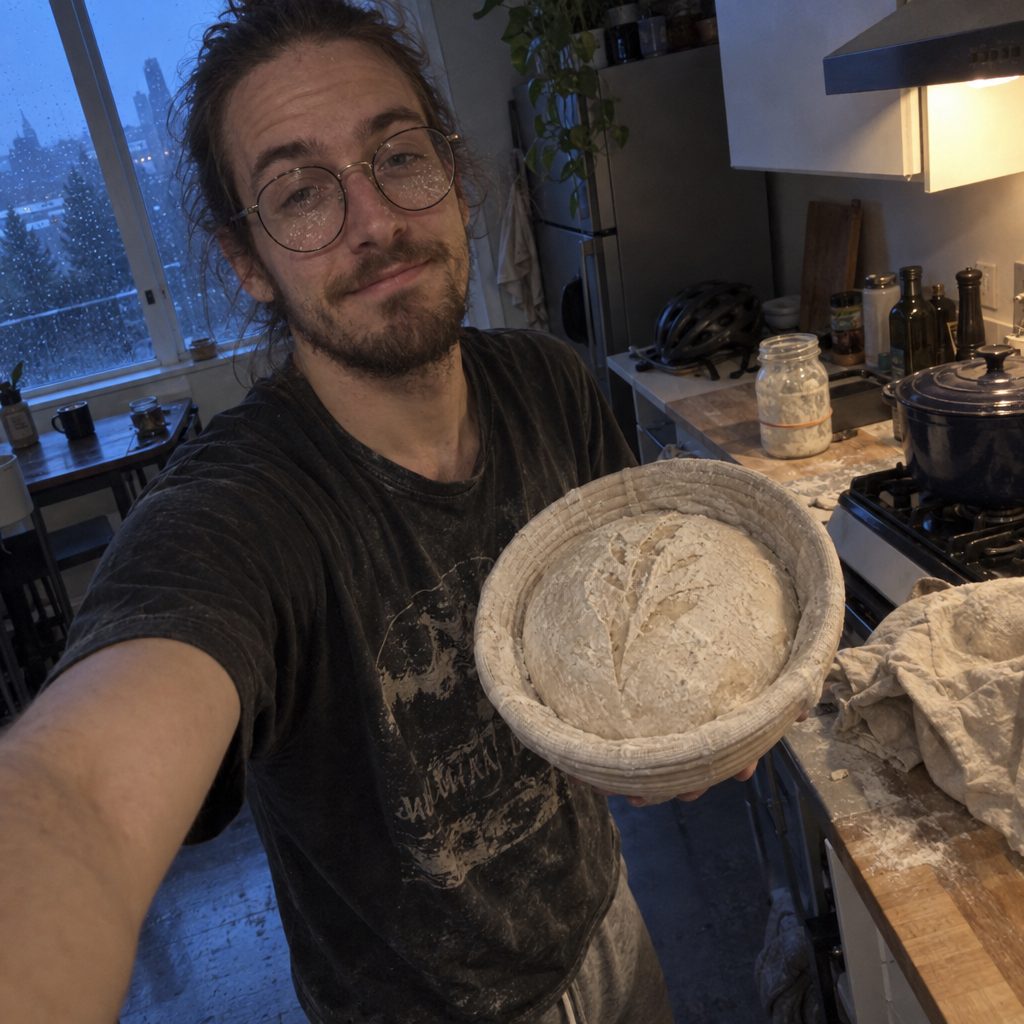
Theo bakes at five in the morning because anxiety wakes him anyway, and kneading is the one thing that makes his hands stop shaking. His first loaves were bricks and he cried over them. Now he scores a boule in the blue dark and feels, for an hour, completely at peace.