
Russian Honey Cake Medovik: Layered Sour Cream Frosting Recipe
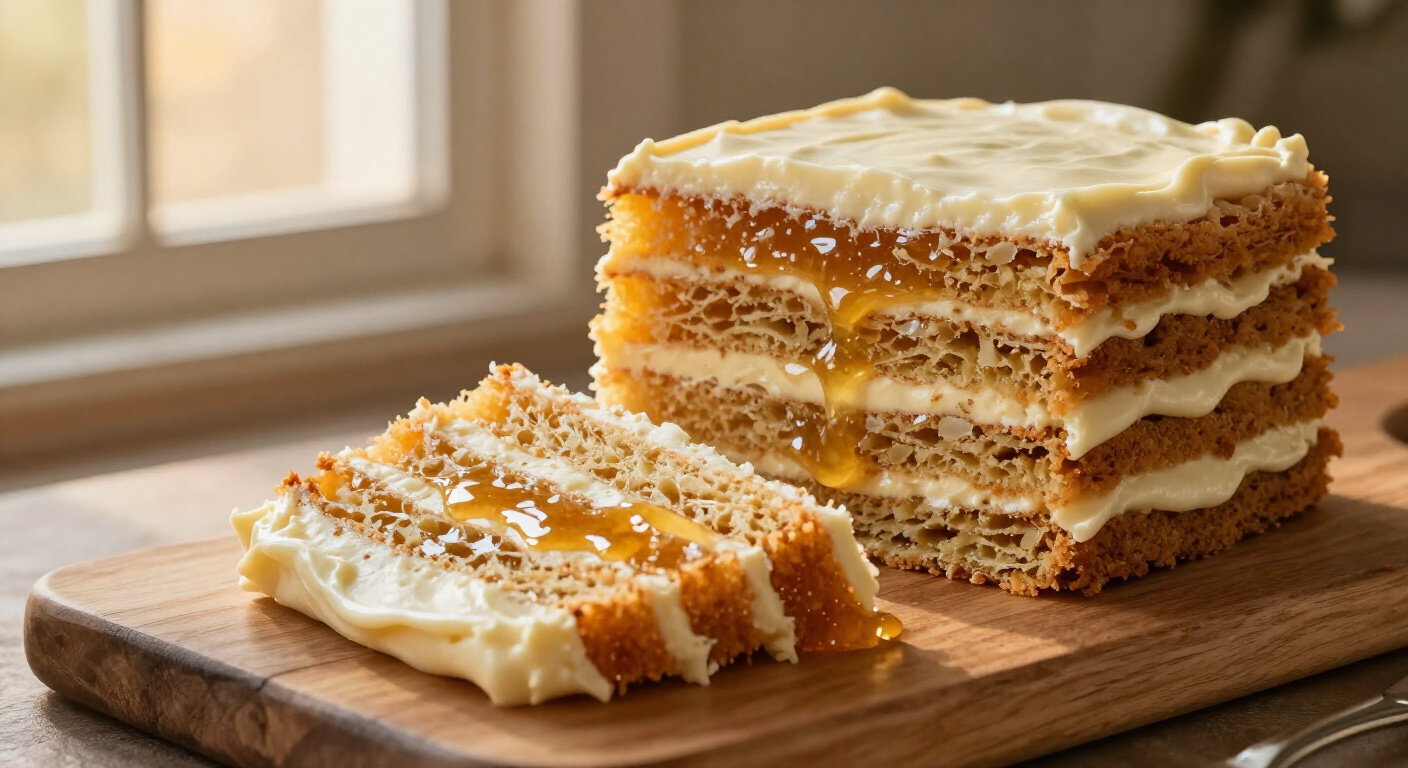
Russian honey cake in 130 minutes: golden, caramel-scented layers under velvety sour cream frosting. Make this showstopper for your next celebration today!
Picture golden, tender russian honey cake layers, with a caramel perfume filling the whole kitchen. Two hours and ten minutes gets you six airy honey layers under a velvety sour cream frosting. This crowd-pleaser shines at birthdays, holidays, or any dinner where guests deserve seconds.
Why This Recipe Works
• Bloom the baking soda in warm honey: Honey is naturally acidic, so the soda fizzes on contact and releases gas that gives the dough its airy lift.
• Chill the dough until firm and workable: Chilling firms the butter and honey, so thin rounds roll cleanly instead of tearing or sticking to the board.
• Bake thin rounds for even color: Thin rounds cook through in minutes, so the sugars brown evenly without drying into crisp, brittle edges.
• Keep the sour cream cold for stability: Chilled sour cream whisks thicker and holds its shape, so the frosting stays spreadable and sliceable.
Ingredients You'll Need
Large Eggs: Eggs bind the dough and give each round its sturdy structure. Let them sit out so they whisk into the warm honey without seizing. Flax eggs can stand in for a vegan version, but the layers will come out a little denser.
Granulated Sugar: This sugar sweetens the dough and helps the rounds turn golden in the oven. It also dissolves into the honey and butter for a smooth base. Coconut sugar is a fine swap, though it makes the layers a touch darker and more caramel-toned.
Honey: Honey gives the cake its signature amber color and deep, floral sweetness. It also keeps the layers tender for days. Maple syrup works in a pinch, but the flavor will shift toward something woodsy.
Unsalted Butter: Softened butter melts into the honey and sugar, adding richness and a silky crumb. Keeping it unsalted lets you control the saltiness with the sea salt. Use the same amount of ghee if you need a dairy-light option.
Baking Soda: Baking soda reacts with the honey and lifts the dough into airy, pillowy layers. Don't swap it for baking powder, since the rise will be different. Skip any substitute here and stick with baking soda.
All-Purpose Flour: Flour provides the structure that holds the dough together and lets it roll into thin, even rounds. Sifting keeps it light, so the dough stays tender. Cake flour can replace it for an even softer layer, though the dough will be more delicate to handle.
Fine Sea Salt: A small pinch of salt balances the sweetness and makes the honey flavor pop. Fine sea salt blends into the dough evenly. Fine table salt works too, but use a slightly smaller measure.
Full-Fat Sour Cream: Sour cream makes the frosting tangy, rich, and spreadable. Chilling it keeps it thick enough to hold soft peaks. Full-fat Greek yogurt is a lighter swap, but drain it well first so the frosting doesn't loosen.
Powdered Sugar: Powdered sugar sweetens the frosting and gives it a smooth, velvety body. Sift it first so no lumps slip through. Superfine sugar can be ground in a blender as a substitute, though the texture will be a bit grainier.
Vanilla Extract: A teaspoon of vanilla rounds out the frosting with warm, sweet aroma. It pairs beautifully with the honey and sour cream. Vanilla bean paste works as a richer swap, using the same amount.


How to Make It (Step by Step)
Melt honey and butter, mix in the dough, chill it, bake six thin rounds, and stack them with frosting. Even if layer cakes intimidate you, each round is simple, so you'll build this one with confidence.

- Melt the honey, sugar, and butter in a saucepan over low heat until smooth and glossy, 3-5 minutes at 200°F / 95°C. Stir often so nothing scorches.

- Off the heat, whisk the eggs into the honey mixture one at a time until smooth and fully blended, 1-2 minutes at room temperature (70°F / 21°C). Keep whisking so the eggs don't scramble.

- Return the pan to low heat and stir in the baking soda until the mixture foams and turns pale caramel, 1-2 minutes at 180°F / 82°C. Expect a soft, airy lift.

- Stir in the sifted flour and fine sea salt until a soft, slightly sticky dough forms and pulls away from the pan, 3-4 minutes at room temperature (70°F / 21°C). Do not overmix.

- Wrap the dough tightly in plastic wrap and chill until firm and no longer sticky, 1 hour at 38°F / 3°C. It should feel cool and easy to handle.

- Divide the chilled dough into six equal pieces and roll each into a thin, even round on a lightly floured board, 3-4 minutes per piece at room temperature (70°F / 21°C). Rounds should feel supple, not tacky.

- Bake each round on a parchment-lined baking sheet until golden-brown and firm to the touch, 4-6 minutes at 375°F / 190°C. Let them cool before stacking.

- Whisk the chilled sour cream, sifted powdered sugar, and vanilla extract until thick, smooth, and spreadable, 2-3 minutes at 40°F / 4°C. The frosting should hold soft peaks.

- Stack the cooled layers, spreading frosting between each and over the top and sides, then chill until the frosting firms, 4 hours at 38°F / 3°C. The cake should slice cleanly.

Recipe Notes
• Storage: Keep the cake covered in the fridge for up to 4 days. Freeze unfrosted layers wrapped tightly for up to 3 months. Thaw overnight in the fridge, then serve chilled or at room temperature.
• Key substitution: No sour cream? Crème fraîche is the best swap. Full-fat Greek yogurt works too, but strain it first so the frosting stays thick.
• Make-ahead tip: Bake the rounds up to 2 days ahead and store them airtight at room temperature. The layers soften as they rest, so the cake slices even more cleanly.
• Common mistake: Stacking layers while they're still warm makes the frosting slide and melt. Wait until every round is fully cool to the touch.
Serving size: 1 portion · Calories: 450 · Total Fat: 18g · Saturated Fat: 11g · Carbs: 62g · Fiber: 1g · Sugar: 40g · Protein: 7g · Sodium: 210mg
Tips and Tricks
- Equipment: Use a heavy rimmed baking sheet: A sturdy, flat sheet lined with parchment bakes every round evenly. The edges brown at the same pace as the center, so no round turns out lopsided.

- Temperature precision: Bake at 375°F / 190°C: Four to six minutes is the sweet spot. Pull the rounds once they're golden-brown and firm to the touch. Leave them longer and they dry out and turn brittle.
- Common mistake: Overmixing the flour: Once the sifted flour goes in, stir only until the dough pulls away from the pan. Extra stirring builds gluten, and your layers come out tough instead of tender.
- Flavour upgrade: Stir in a pinch of ground cinnamon: Add a small pinch to the sour cream frosting. It adds a warm note that plays nicely with the honey without taking over.
- Texture tip: Whisk the frosting only to soft peaks: Chilled sour cream should turn thick, smooth, and spreadable. Whisk it too long and it turns grainy and loose, so stop once soft peaks hold.

Frequently Asked Questions
Can I make this honey cake gluten-free with a flour swap?
Replace the 3 cups (about 400 g) of all-purpose flour with an equal weight of a 1:1 gluten-free baking flour blend that contains xanthan gum. Handle the rounds gently when rolling, since gluten-free dough tears more easily than wheat dough.
Can I freeze the fully frosted cake, and how do I serve it afterward?
Yes, once the frosting is firm, wrap the whole cake tightly and freeze it for up to 1 month. Thaw it in the fridge for 12 hours, then serve it within 2 hours of leaving the fridge.
Why does my honey cake dough turn out tough or sticky when rolling?
Dough that is too warm or underchilled stays tacky and tears, so chill it until firm and cool to the touch. If it still sticks, dust the board and pin lightly with sifted flour, adding only a little at a time.
What to Serve With This
- Raspberry Lemon Sorbet: Its sharp, icy tartness cuts through the rich honey layers and velvety frosting, so every bite feels fresh.
- Orange and Mint Salad: Juicy citrus segments add bright acidity and a cool herbal snap that balances the caramel sweetness.
- Sour Cherry Compote: Tart, jammy cherries bring a sharp pop of flavour against the soft, creamy sponge.
- Lemon-Zest Greek Yogurt: Thick, tangy yogurt offers a cool, lightly sour contrast to the sweet, dense cake.

Russian Honey Cake Medovik: Layered Sour Cream Frosting Recipe
Dessert / Russian
- Prep
- 1 h 30 min
- Cook
- 40 min
- Total
- 2 h 10 min
- Servings
- 12
- Calories
- 450 kcal
Ingredients
- 3 large eggs, room temperature
- 1 cup (200 g) granulated sugar
- ½ cup (170 g) honey
- 4 tablespoons (55 g) unsalted butter, softened
- 1 teaspoon baking soda
- 3 cups (about 400 g) all-purpose flour, sifted, plus extra for rolling
- ¼ teaspoon fine sea salt
- 2 cups (480 g) full-fat sour cream, chilled
- ½ cup (60 g) powdered sugar, sifted
- 1 teaspoon vanilla extract
Instructions
- Melt the honey, sugar, and butter in a saucepan over low heat until smooth and glossy, 3-5 minutes at 200°F / 95°C. Stir often so nothing scorches.
- Off the heat, whisk the eggs into the honey mixture one at a time until smooth and fully blended, 1-2 minutes at room temperature (70°F / 21°C). Keep whisking so the eggs don't scramble.
- Return the pan to low heat and stir in the baking soda until the mixture foams and turns pale caramel, 1-2 minutes at 180°F / 82°C. Expect a soft, airy lift.
- Stir in the sifted flour and fine sea salt until a soft, slightly sticky dough forms and pulls away from the pan, 3-4 minutes at room temperature (70°F / 21°C). Do not overmix.
- Wrap the dough tightly in plastic wrap and chill until firm and no longer sticky, 1 hour at 38°F / 3°C. It should feel cool and easy to handle.
- Divide the chilled dough into six equal pieces and roll each into a thin, even round on a lightly floured board, 3-4 minutes per piece at room temperature (70°F / 21°C). Rounds should feel supple, not tacky.
- Bake each round on a parchment-lined baking sheet until golden-brown and firm to the touch, 4-6 minutes at 375°F / 190°C. Let them cool before stacking.
- Whisk the chilled sour cream, sifted powdered sugar, and vanilla extract until thick, smooth, and spreadable, 2-3 minutes at 40°F / 4°C. The frosting should hold soft peaks.
- Stack the cooled layers, spreading frosting between each and over the top and sides, then chill until the frosting firms, 4 hours at 38°F / 3°C. The cake should slice cleanly.
Share this article
About the author
Theo Lindqvist
Theo bakes at five in the morning because anxiety wakes him anyway, and kneading is the one thing that makes his hands stop shaking. His first loaves were bricks and he cried over them. Now he scores a boule in the blue dark and feels, for an hour, completely at peace.