Soft Dark Rye Bread Recipe for a Basic Homemade Loaf
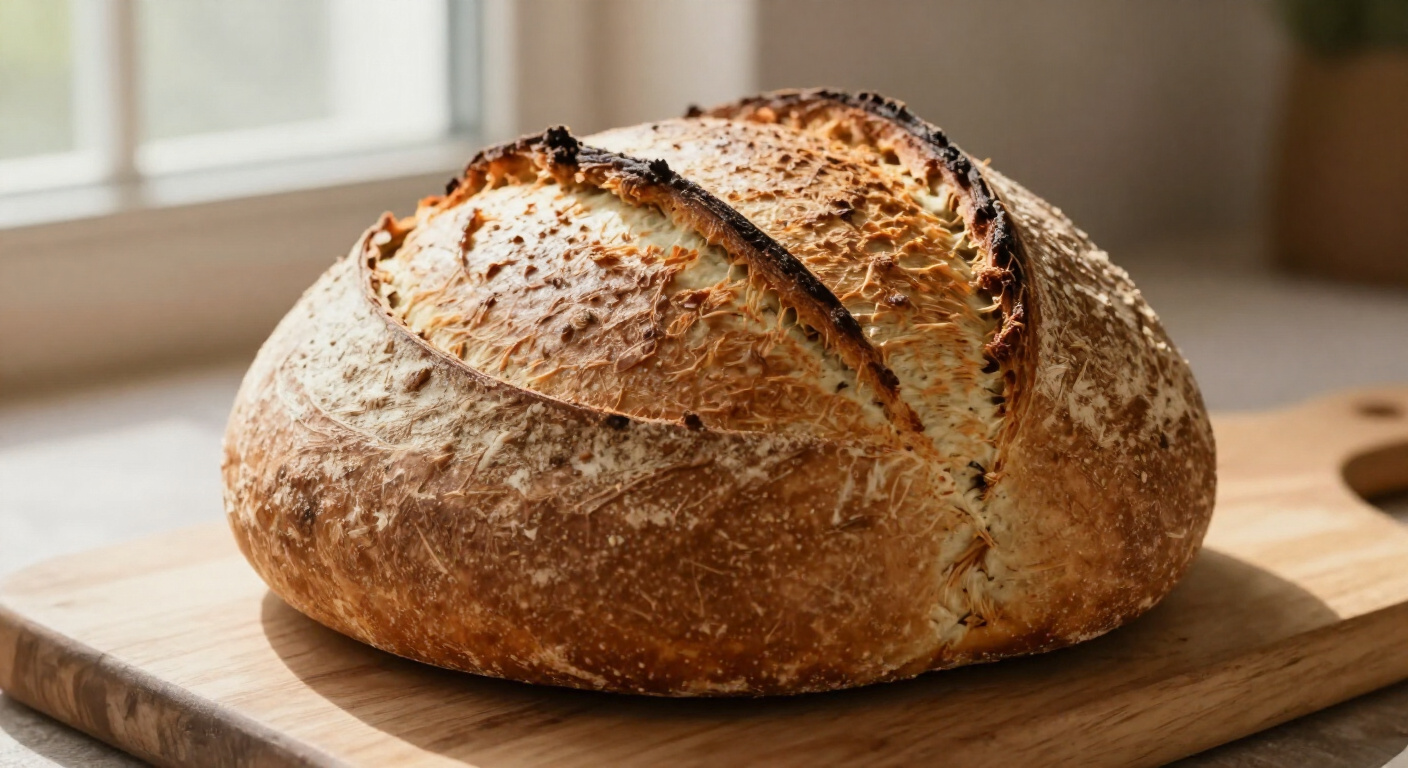
Rye bread recipe with a soft, dark crumb and molasses aroma: a homemade loaf ready in 75 minutes. Bake one this weekend and see how easy it is.
This rye bread recipe fills your kitchen with molasses and warm toast before the loaf even cools. Start to finish takes about 75 minutes and yields a dark, tender loaf even beginners can manage. Bake it for a weekend brunch or a cozy dinner when you want something rustic and warm.
Rye flour has less gluten than wheat, so this dough feels stickier than you expect. Dust your hands lightly, not the dough, and trust that tacky texture.
Ingredients You'll Need
Bread Flour: This high-protein wheat flour gives the loaf its chewy backbone and lift. Rye has very little gluten, so bread flour does the structural work. All-purpose flour works in a pinch, though the crumb will be a little softer and less springy.
Dark Rye Flour: This is the star of the loaf. It's dense and earthy, and it gives the bread its deep flavor and rustic dark color. Medium rye is the best swap, though the loaf will be a shade lighter in both color and taste.
Instant Yeast: This small packet of live yeast is what makes the dough rise into a puffy, airy loaf. Instant yeast mixes straight into the dry flour, so there's no separate proofing step. Active dry yeast also works; dissolve it in the water first and expect a slightly slower rise.
Fine Sea Salt: Salt tightens the gluten, slows the yeast down a little, and keeps the flavor from tasting flat. Fine grains blend evenly into the flour. Fine table salt is a good stand-in at the same measure, since it's just as fine.
Molasses: This thick, dark syrup adds a rich, slightly bittersweet depth and keeps the crumb moist and tender. It dissolves into the warm water and turns the liquid a glossy, deep amber. Dark treacle is the closest match, while honey or maple syrup works in a pinch with a lighter flavor.
Lukewarm Water: Water hydrates the flour so gluten can form and the yeast can wake up. Around 35°C (95°F) feels like a comfortably warm bath, which is exactly what yeast loves. Lukewarm milk makes a softer, richer loaf if you prefer, though the texture will shift a little.


How to Make It (Step by Step)
This loaf comes together by mixing, kneading, rising twice, then baking in a Dutch oven until deep golden-brown. Even if your first loaf turns out a bit dense, the kitchen smell alone will make you smile.

- Whisk the bread flour, dark rye flour, instant yeast, and fine sea salt in a large bowl until evenly blended and uniform in colour, 1 minute at room temperature (70-75°F / 21-24°C).

- Stir the molasses into the lukewarm water until fully dissolved, 30-60 seconds at 95°F (35°C). The liquid should turn glossy and smooth, a deep dark amber.

- Pour the molasses water into the flour mix and stir with a wooden spoon until a shaggy, sticky dough forms, 1-2 minutes at 70-75°F (21-24°C). Rough clumps should pull together into one ragged mass.

- Knead the dough on a lightly floured counter for 8-10 minutes until smooth, tacky, and springy, at 70-75°F (21-24°C). It's ready when it bounces back slowly after a gentle poke.

- Place the dough in a clean bowl, cover it, and let it rise 1-1.5 hours until doubled and puffy, at 75-80°F (24-27°C). You'll see soft bubbles and a gently domed top.

- Shape the dough into a tight boule, cover it, and rest 45-60 minutes until puffy and risen, at 75-80°F (24-27°C). The dough should spring back slowly when pressed.

- Score the top with one deep diagonal slash, then bake covered in a preheated Dutch oven at 450°F (230°C) for 20-25 minutes until the loaf springs up and the crust sets.

- Remove the lid and bake uncovered at 450°F (230°C) for 20-25 minutes until deep golden-brown and hollow when tapped on the bottom, about 205°F (96°C) inside.

Recipe Notes
• Storage: Keep it wrapped at room temperature for up to 3 days. The fridge dries rye out fast. Freeze slices in a zip bag for 3 months, then toast them straight from frozen.
• Key substitution: No molasses? Use the same amount of dark brown sugar or dark maple syrup. You'll lose a little earthy depth, but the loaf stays dark and soft.
• Make-ahead tip: Whisk the bread flour, rye flour, yeast, and salt in an airtight jar up to a week early. Then the morning bake takes just minutes to start.
• Common mistake: Slicing the loaf while it's still warm. The crumb is still setting, so a hot cut turns gummy. Wait at least two hours before you cut.
Serving size: 1 portion · Calories: 165 · Total Fat: 1g · Saturated Fat: 0g · Carbs: 34g · Fiber: 4g · Sugar: 3g · Protein: 5g · Sodium: 310mg
Tips and Tricks
- Equipment: Use a Dutch oven: The heavy lid traps steam, so the loaf rises tall and the crust blisters. Preheat the pot fully before the dough goes in.

- Temperature precision: Keep the water at 95°F (35°C): Water that's too hot can kill the yeast. Use a thermometer, because lukewarm feels different to everyone.
- Common mistake: Skipping the Dutch oven preheat: Dough dropped into a cool pot bakes unevenly and spreads flat. Give the pot its full preheat at 450°F (230°C) first.
- Flavour upgrade: Add 1 teaspoon caraway seeds: Stir them into the flour mix with the salt. They add a classic Scandinavian tang that pairs beautifully with molasses. Entirely optional.
- Texture tip: Cool on a wire rack: Set the loaf on a rack, not a flat board, so air reaches the bottom. The base stays crisp instead of going soft and damp.

Frequently Asked Questions
Can I use all-purpose flour or gluten-free flour in place of the bread flour and rye flour?
Swap the 300 g bread flour for 300 g all-purpose flour, and the 200 g dark rye flour for 200 g light rye flour for a softer, paler crumb. Gluten-free flour blends don't work here, since rye needs gluten to hold its structure.
Can I freeze shaped dough so I can bake fresh loaves later?
Freeze the shaped boule on a floured tray until firm, then wrap it tightly for up to 1 month. Thaw it in the fridge overnight, then let it rise at room temperature for 1 hour before scoring and baking as directed.
Why is my rye loaf dense and gummy even though I followed the steps?
Under-proofing is the usual culprit, so the dough needs to be visibly doubled before shaping. Press it lightly; if the dent springs back slowly and fills in, it's ready to bake.
What to Serve With This
- Cucumber and Dill Salad: Vinegar-bright cucumber slices cut through the molasses sweetness and earthy depth of the dark crumb.
- Pickled Herring: Briny, tangy fillets add a sharp, salty contrast that keeps every bite of dense rye feeling fresh.
- Chive Cream Cheese: Smooth and mild, it melts into the tender crumb and softens the rustic crust.
- Sharp Cheddar: Salty, crumbly wedges bring a bold savory bite that pairs beautifully with the malty loaf.

Soft Dark Rye Bread Recipe for a Basic Homemade Loaf
Side Dish / Scandinavian
- Prep
- 25 min
- Cook
- 50 min
- Total
- 1 h 15 min
- Servings
- 10
- Calories
- 165 kcal
Ingredients
- 300 g bread flour (about 2½ cups), spooned and leveled
- 200 g dark rye flour (about 1¾ cups), spooned and leveled
- 1 packet (7 g) instant yeast (about 2¼ teaspoons)
- 2 teaspoons fine sea salt
- 1 tablespoon molasses
- 330 ml lukewarm water (about 1⅓ cups), around 35°C (95°F)
Instructions
- Whisk the bread flour, dark rye flour, instant yeast, and fine sea salt in a large bowl until evenly blended and uniform in colour, 1 minute at room temperature (70-75°F / 21-24°C).
- Stir the molasses into the lukewarm water until fully dissolved, 30-60 seconds at 95°F (35°C). The liquid should turn glossy and smooth, a deep dark amber.
- Pour the molasses water into the flour mix and stir with a wooden spoon until a shaggy, sticky dough forms, 1-2 minutes at 70-75°F (21-24°C). Rough clumps should pull together into one ragged mass.
- Knead the dough on a lightly floured counter for 8-10 minutes until smooth, tacky, and springy, at 70-75°F (21-24°C). It's ready when it bounces back slowly after a gentle poke.
- Place the dough in a clean bowl, cover it, and let it rise 1-1.5 hours until doubled and puffy, at 75-80°F (24-27°C). You'll see soft bubbles and a gently domed top.
- Shape the dough into a tight boule, cover it, and rest 45-60 minutes until puffy and risen, at 75-80°F (24-27°C). The dough should spring back slowly when pressed.
- Score the top with one deep diagonal slash, then bake covered in a preheated Dutch oven at 450°F (230°C) for 20-25 minutes until the loaf springs up and the crust sets.
- Remove the lid and bake uncovered at 450°F (230°C) for 20-25 minutes until deep golden-brown and hollow when tapped on the bottom, about 205°F (96°C) inside.
Share this article
About the author
Theo Lindqvist
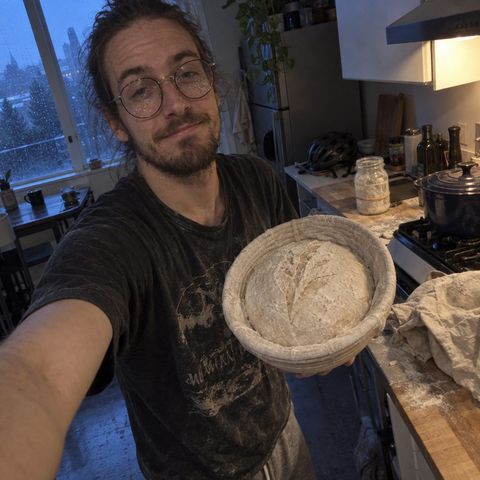
Theo bakes at five in the morning because anxiety wakes him anyway, and kneading is the one thing that makes his hands stop shaking. His first loaves were bricks and he cried over them. Now he scores a boule in the blue dark and feels, for an hour, completely at peace.