Sourdough Bread Recipe with Starter: Golden Crusted Boule
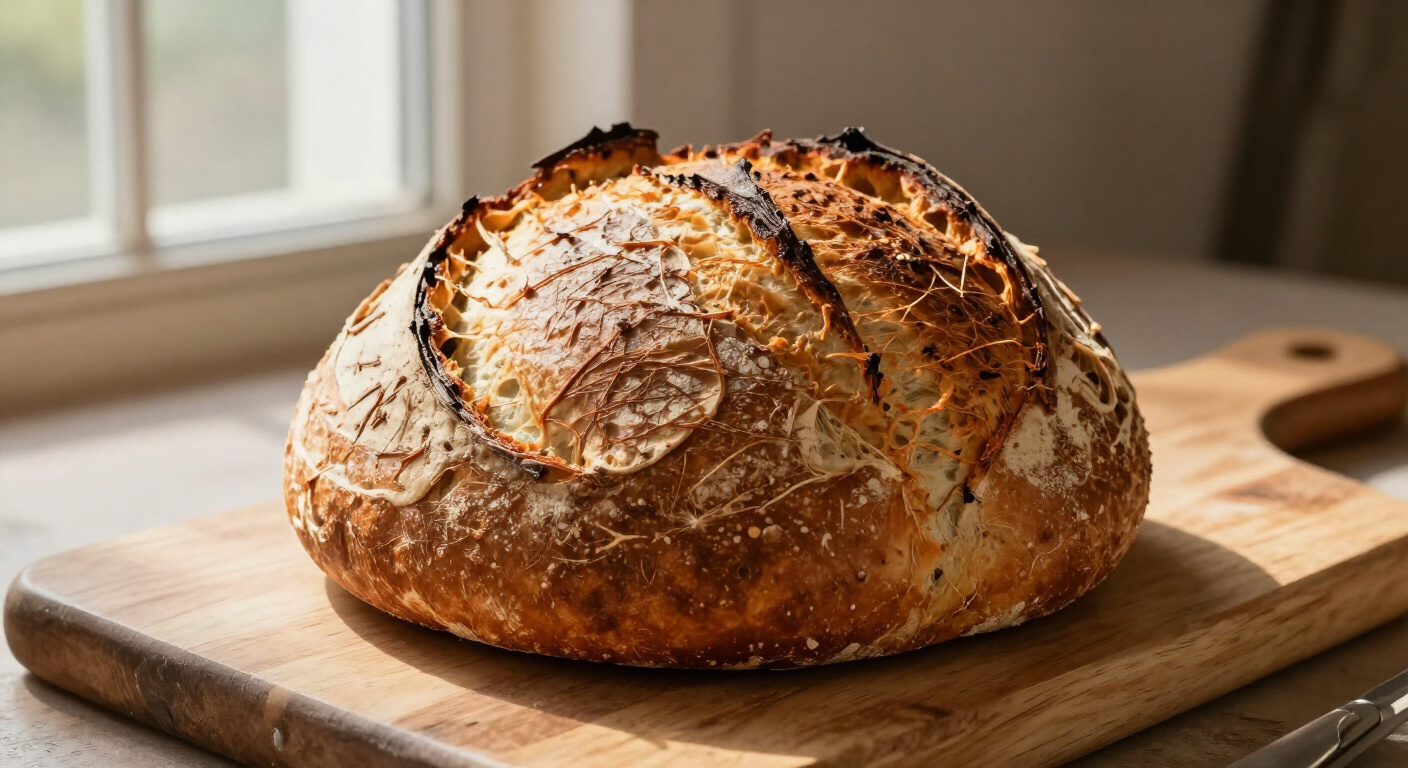
Sourdough bread recipe with starter: crackling golden crust and a tangy, honeyed crumb in 75 minutes. Get your bubbly starter baking today.
Golden, crackling crust and a honeyed, tangy crumb: this sourdough bread recipe with starter delivers both in 75 minutes. Your bubbly starter does all the leavening, so no packaged yeast is needed, and it's a weekend crowd-pleaser.
Why This Recipe Works
• Rest the flour and water first: Letting the dough sit for 30 to 60 minutes lets the flour fully drink up the water. Gluten starts linking on its own, so later kneading feels almost effortless.
• Add salt after the rest: Salt tightens the gluten network and slows fermentation a little. Folding it in after the rest keeps the dough from tearing as it firms up.
• Stretch and fold instead of kneading: Lifting and folding the dough every 30 minutes builds strength gently. Each fold traps air, so the dough turns elastic and full of bubbles.
• Chill the shaped boule overnight: Twelve to sixteen hours in the fridge firms the surface and slows fermentation. Cold dough also scores cleanly, giving you a bold, sharp opening in the oven.
Ingredients You'll Need
Active Sourdough Starter: This living culture of wild yeast and bacteria is the engine of your loaf. Bubbly and recently fed, it lifts the dough and builds the honeyed tang you're after. No starter? Ask a baker friend for a spoonful, or use instant yeast, which gives a milder, less sour crumb.
Bread Flour: Bread flour has more protein than all-purpose, so it builds strong gluten for a chewy, open crumb. That structure lets the boule hold its shape in the oven. The best substitute is all-purpose flour, which bakes a softer, more tender loaf.
Lukewarm Water: Water hydrates the flour and wakes up the starter. Keep it comfortably warm, never hot, or the yeast gets stressed and the dough slows down. Filtered or bottled water is the best swap if your tap water tastes harsh or chlorinated.
Fine Sea Salt: Salt tightens the gluten network, slows fermentation a little, and adds the flavor that makes the crumb sing. Fine grains dissolve quickly into the dough. Fine kosher salt or table salt works too, but weigh it, since grain size changes how much fits in a spoon.


How to Make It (Step by Step)
Mix starter, water, and flour, then let time do the heavy lifting with folds, rises, and an overnight chill. Then the loaf finishes in a blazing-hot Dutch oven, giving you that blistered, golden crust you're after.


- Combine the 100 g bubbly, recently fed starter with the 350 g lukewarm water (about 28°C / 82°F) in a large bowl. Add the 500 g bread flour and mix until no dry flour remains and a shaggy dough forms, 1-2 minutes at 75°F / 24°C.

- Cover the bowl and rest the dough until it feels soft, slack, and fully hydrated, 30-60 minutes at 75°F / 24°C. This rest does the quiet work for you.

- Sprinkle the 10 g fine sea salt over the dough and fold it in until fully absorbed and the dough feels smooth and tacky, 3-5 minutes at 75°F / 24°C.

- Stretch and fold the dough in the bowl, lifting one side up and over the center, repeating 3 sets 30 minutes apart until it feels elastic and holds its shape, 90-120 minutes at 75°F / 24°C.

- Let the dough bulk ferment undisturbed until it looks visibly puffy, domed, and full of bubbles, 4-6 hours at 76°F / 24°C.

- Turn the dough onto a clean counter and shape it into a tight round boule, pulling the surface taut until smooth, 2-3 minutes at 75°F / 24°C.

- Place the boule seam-side up in a bowl and refrigerate until it feels firm and looks slightly puffed, 12-16 hours at 38°F / 3°C.

- Preheat an empty Dutch oven with its lid on until it is very hot, 30-45 minutes at 475°F / 245°C. Keep the oven rack in the middle position.

- Score the cold boule with one bold slash about 1 cm deep, transfer it into the hot Dutch oven, cover, and bake until the scored top has risen and opened, 20 minutes at 475°F / 245°C.

- Remove the lid and bake until the crust is deep golden-brown and sounds hollow when tapped, 20-25 minutes at 425°F / 220°C. Your kitchen will smell incredible.

Recipe Notes
• Storage: Skip the fridge, since it dries bread out fast. Keep the loaf cut-side down on a board for up to three days. Slices freeze well for about three months.
• Key substitution: All-purpose flour works in a pinch. Use the same 500 g, and expect a softer crumb with less chew.
• Make-ahead tip: Feed your starter 6 to 8 hours before mixing so it peaks right on time. Weigh the flour and salt the night before for a quicker start.
• Common mistake: Mixing with a starter that hasn't doubled yet. A sluggish starter gives a dense, gummy loaf. Test it by dropping a spoonful in water. If it floats, you're ready.
Serving size: 1 portion · Calories: 240 · Total Fat: 1g · Saturated Fat: 0g · Carbs: 50g · Fiber: 2g · Sugar: 1g · Protein: 9g · Sodium: 590mg
Tips and Tricks
- Equipment: Use a Dutch oven: Its heavy lid traps steam around the dough. That steam lets the score open wide and the crust turn golden.

- Temperature precision: Fully preheat the pot: Heat the empty Dutch oven to 475°F / 245°C for 30 to 45 minutes. A pot that's only warm won't give the loaf its big rise.
- Common mistake: Shaping the boule too loosely: Pull the surface taut so the round holds its dome. A slack boule spreads flat in the pot instead of rising tall.
- Flavour upgrade: A pinch of flaky salt: Sprinkle flaky sea salt over the scored top just before baking. It adds a crunchy, salty pop against the honeyed crumb.
- Texture tip: Bake uncovered, then cool on a rack: Bake the final stretch uncovered at 425°F / 220°C until deep golden-brown. Cool it on a wire rack so the crust stays crackly.

Frequently Asked Questions
Can I swap part of the bread flour for whole wheat flour in this recipe?
Yes, replace 100 g of the 500 g bread flour with 100 g whole wheat flour and add 20 g extra lukewarm water to keep the dough hydrated. Expect a nuttier, slightly denser crumb and a deeper brown crust, and the bulk fermentation may run a bit faster.
How do I bring back a crisp crust on a day-old loaf?
Mist the whole loaf lightly with water, then warm it at 350°F / 175°C for 8 to 10 minutes directly on the oven rack. Let it rest for 5 minutes before slicing so the crumb sets.
Why does my boule spread flat instead of rising tall in the oven?
The dough was likely underproofed or overproofed, or the shaping was too loose. Check that the boule feels firm and springs back slowly when poked, and tighten the surface before chilling so it climbs up instead of spreading out.
What to Serve With This
- Herbed Lemon Ricotta: Cool, creamy ricotta with lemon zest and fresh herbs softens the crackly crust and brightens every bite.
- White Bean Dip: Silky, mild beans with a squeeze of lemon make a smooth partner for the tangy, chewy crumb.
- Marinated Olives with Lemon Zest: Briny, bright olives add a sharp, salty contrast to the mellow bread.
- Cucumber and Radish Salad: Crisp, cold cucumber and peppery radish with a light vinegar dressing cut through every warm slice.

Sourdough Bread Recipe with Starter: Golden Crusted Boule
Breakfast / American
- Prep
- 30 min
- Cook
- 45 min
- Total
- 1 h 15 min
- Servings
- 8
- Calories
- 240 kcal
Ingredients
- 100 g active sourdough starter, bubbly and recently fed
- 500 g bread flour, measured by weight
- 350 g lukewarm water (about 28°C / 82°F)
- 10 g fine sea salt
Instructions
- Combine the 100 g bubbly, recently fed starter with the 350 g lukewarm water (about 28°C / 82°F) in a large bowl. Add the 500 g bread flour and mix until no dry flour remains and a shaggy dough forms, 1-2 minutes at 75°F / 24°C.
- Cover the bowl and rest the dough until it feels soft, slack, and fully hydrated, 30-60 minutes at 75°F / 24°C. This rest does the quiet work for you.
- Sprinkle the 10 g fine sea salt over the dough and fold it in until fully absorbed and the dough feels smooth and tacky, 3-5 minutes at 75°F / 24°C.
- Stretch and fold the dough in the bowl, lifting one side up and over the center, repeating 3 sets 30 minutes apart until it feels elastic and holds its shape, 90-120 minutes at 75°F / 24°C.
- Let the dough bulk ferment undisturbed until it looks visibly puffy, domed, and full of bubbles, 4-6 hours at 76°F / 24°C.
- Turn the dough onto a clean counter and shape it into a tight round boule, pulling the surface taut until smooth, 2-3 minutes at 75°F / 24°C.
- Place the boule seam-side up in a bowl and refrigerate until it feels firm and looks slightly puffed, 12-16 hours at 38°F / 3°C.
- Preheat an empty Dutch oven with its lid on until it is very hot, 30-45 minutes at 475°F / 245°C. Keep the oven rack in the middle position.
- Score the cold boule with one bold slash about 1 cm deep, transfer it into the hot Dutch oven, cover, and bake until the scored top has risen and opened, 20 minutes at 475°F / 245°C.
- Remove the lid and bake until the crust is deep golden-brown and sounds hollow when tapped, 20-25 minutes at 425°F / 220°C. Your kitchen will smell incredible.
Share this article
About the author
Theo Lindqvist
Theo bakes at five in the morning because anxiety wakes him anyway, and kneading is the one thing that makes his hands stop shaking. His first loaves were bricks and he cried over them. Now he scores a boule in the blue dark and feels, for an hour, completely at peace.