50 Stunning Sourdough Scoring Patterns for a Crusty Boule
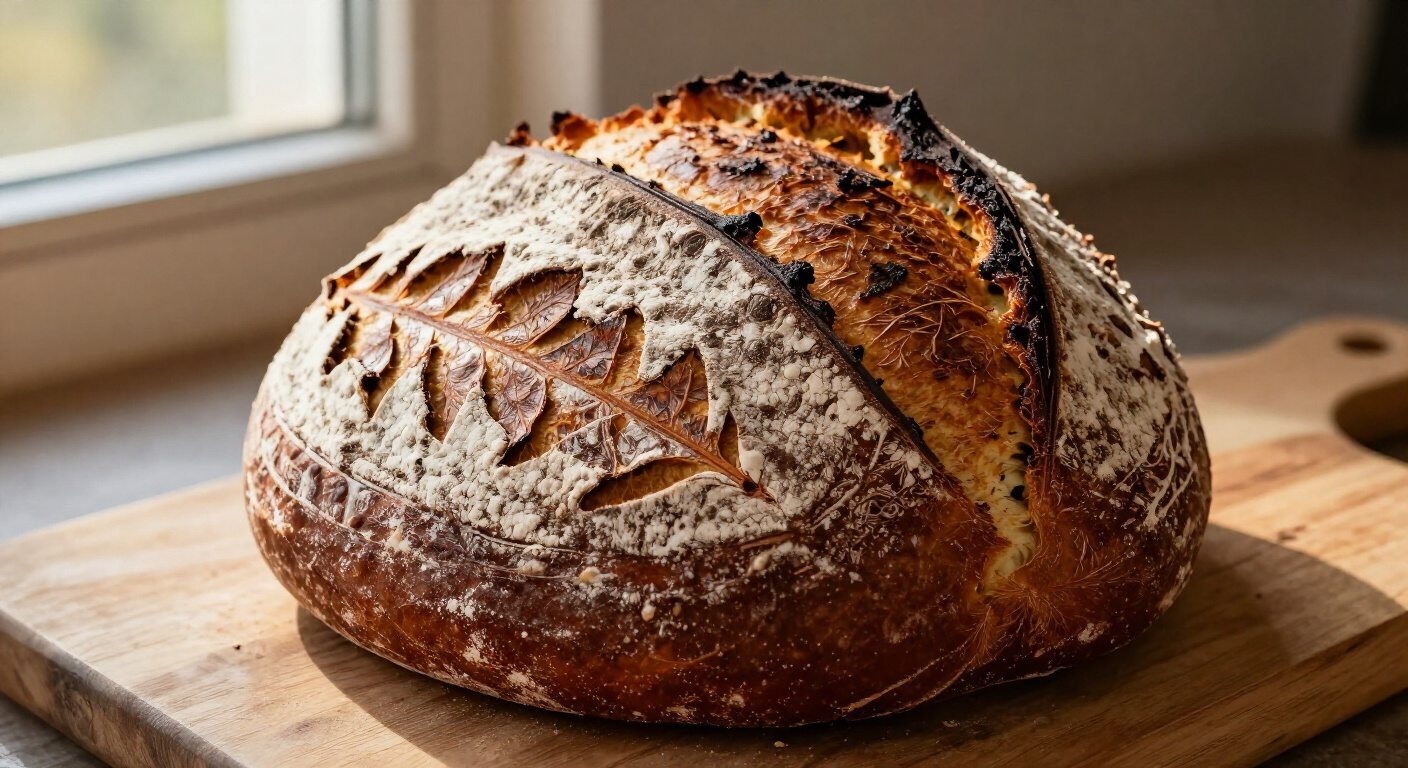
Sourdough scoring patterns for every season: try 50 designs, from fall leaves to wheat stalks, for a crackling boule in 75 minutes hands-on.
These sourdough scoring patterns turn 75 minutes of hands-on time into a crackling, mahogany boule with ears that curl like autumn leaves. Cold-proofed dough makes every cut clean, so beginners can show off at Sunday brunch or fall gatherings.
Scoring at a shallow 30-degree angle lets one edge peel back into a proud ear. Then the scorching, lidded Dutch oven traps steam, so every cut blooms wide before the crust sets.
Ingredients You'll Need
Active Sourdough Starter: This is your living, bubbly culture of wild yeast and bacteria. It should look domed, smell pleasantly tangy, and feel airy when you stir it. A lively starter gives the oven spring that pushes your scores wide open. Without one, use a pinch of instant yeast for a milder, less tangy loaf with softer ears.
Lukewarm Water: Warm, around body temperature, so it wakes up the starter without stressing it. You hold a little back for later, which helps the salt dissolve evenly. Hydration keeps the crumb tender and the crust crackly. Filtered water is the best swap if your tap water tastes strongly of chlorine.
Bread Flour: High-protein wheat flour that builds strong, stretchy gluten. That strength lets the dough hold a taut skin, which is exactly what a clean, crisp score needs. A dusting on top also makes your pattern pop in pale contrast against the mahogany crust. High-protein all-purpose flour works too, though your ears may lift a little lower.
Fine Sea Salt: Tiny crystals that melt into the dough quickly and evenly. Salt seasons the bread, tightens the gluten, and helps that deep golden-brown crust develop. Skip it and the loaf tastes flat and spreads like a puddle. Kosher salt is the best substitute. Weigh it, since grains vary in size.


How to Make It (Step by Step)
This loaf is all about patience and one Dutch oven: mix, fold, cold proof overnight, then score and bake until the crust turns deep mahogany.
Even if your first loaves were bricks like mine, the cold dough holds still so your lame glides through clean every time.

- Stir 100 g bubbly starter into 350 g lukewarm water, then add 500 g bread flour. Mix by hand until no dry flour remains and a shaggy dough forms. Rest it covered, 45 to 60 minutes at 78°F / 26°C. This quiet rest is where the gluten starts building itself.

- Sprinkle 10 g fine sea salt over the dough and pour in the last 25 g water. Squeeze and pinch until the dough turns smooth and slightly tacky, 5 to 8 minutes at 78°F / 26°C. Your hands will feel it come together. That's the good part.

- Stretch and fold the dough in 4 sets, 30 minutes apart, then leave it to rise. Bulk ferment until it's domed, jiggly and about 50% bigger with bubbles at the edges, 4 to 5 hours at 78°F / 26°C.

- Tip the dough onto a lightly floured counter and shape it into a tight boule. Drag it toward you until the surface feels taut and springy, 10 to 15 minutes at 72°F / 22°C. Set it seam-side up in a floured banneton.

- Cover the banneton and slide it into the fridge. Cold proof until the dough looks slightly puffy and a fingertip dent springs back slowly, 12 to 16 hours at 38°F / 3°C. The cold dough makes clean, crisp scoring so much easier.

- Place a lidded cast iron Dutch oven in the oven and preheat until it's scorching hot, 45 to 60 minutes at 500°F / 260°C. Don't rush this. A blazing pot gives you the oven spring every pattern needs.

- Flip the cold boule onto flour-dusted parchment. Score your design with a lame, about ¼ inch deep at a 30-degree angle, 1 to 2 minutes while the dough is still 38°F / 3°C. Watch the cuts part slightly and the edges lift. This is my peaceful minute.

- Lower the parchment and boule into the hot Dutch oven and cover it. Bake until you hear a gentle crackle and steam hisses from the lid, 20 minutes at 475°F / 245°C. Trust the lid. It traps steam so your scores bloom open.

- Remove the lid and keep baking until the crust turns deep mahogany and the ear lifts sharply. The loaf should sound hollow when tapped underneath, 20 to 25 minutes at 450°F / 230°C. Those dark scored edges are pure joy.

- Lift the loaf onto a wire rack. Cool until the crust crackles softly and the base feels cool to the touch, 1 to 2 hours at 72°F / 22°C. Waiting is hard. It sets the crumb and shows off your pattern beautifully.

Skip the fridge: wrapped slices keep three days on the counter, freeze three months, and crisp up at 350°F. All-purpose flour swaps in, the boule waits 16 hours cold, and never score warm dough.
Serving size: 1 portion · Calories: 190 · Total Fat: 0.8g · Saturated Fat: 0.1g · Carbs: 39g · Fiber: 1.4g · Sugar: 0.2g · Protein: 6.5g · Sodium: 390mg
Tips and Tricks
- Equipment: Use a curved lame and a lidded cast iron Dutch oven. A razor-sharp lame glides through cold dough without dragging. The heavy cast iron pot holds fierce heat and traps steam. Together they let every pattern bloom open wide.

- Temperature precision: Preheat the pot at 500°F for a full 45 to 60 minutes. A lukewarm pot gives a flat, pale loaf with sleepy scores. Let the Dutch oven get scorching hot first. Then drop to 475°F the moment the boule goes in. That blast of heat powers the oven spring.
- Common mistake: Sawing or cutting straight down. Hesitant, back-and-forth strokes tear the skin and leave ragged lines. A vertical blade makes the cut spread flat instead of curling. Tilt the lame to about 30 degrees and make each cut in one smooth stroke. Keep it about ¼ inch deep.
- Flavour upgrade: Roll the shaped boule in toasted sesame seeds. Mist the taut surface lightly and press it into the seeds before it goes into the banneton. They toast to a nutty, fragrant crunch in the oven. Your scores look even sharper against the speckled crust.
- Texture tip: Bake uncovered until the crust turns truly dark. After 20 minutes, lift the lid and bake at 450°F for 20 to 25 minutes. Wait for deep mahogany and a sharp, crackly ear. Then let it cool on a rack for 1 to 2 hours. The crust stays shattering-crisp and the crumb sets properly.

Frequently Asked Questions
Can I use whole wheat or rye flour and still get crisp scoring patterns?
Yes, swap up to 100 g whole wheat or 75 g rye for the same weight of bread flour, and add 10 to 15 g extra water since bran drinks it up. Keep intricate designs simpler, because heavier doughs bloom less and fine leaf cuts can blur.
Can I par-bake a scored boule ahead so the pattern looks fresh for guests?
Yes: bake 20 minutes lidded at 475°F, then 10 minutes uncovered until pale gold, cool, and wrap; it keeps 2 days refrigerated or 1 month frozen. Finish it straight from cold on a bare oven rack at 450°F for 15 to 20 minutes until the scored edges turn deep mahogany.
Why do my scoring patterns seal shut or tear instead of opening into an ear?
The blade is usually dragging. Hold the lame at 30 degrees and cut about ¼ inch deep in one quick stroke while the dough is still 38°F, and replace the razor if the cuts snag or leave ragged edges.
What to Serve With This
- Roasted Butternut Squash Soup: Velvety, sweet and gently spiced, it softens that crackling mahogany crust when you dunk a thick slice.
- Whipped Ricotta with Honey: Cool, fluffy ricotta melts into the warm, tangy crumb and makes a lovely contrast to every crisp edge.
- Crisp Apple and Fennel Salad: Bright, juicy apple and shaved fennel bring snappy acidity that cuts through the deep, toasty crust.
- Baked Brie: Gooey, buttery brie oozes over each slice, so the chewy, crusty bread feels luxuriously rich.

50 Stunning Sourdough Scoring Patterns for a Crusty Boule
Side Dish / American
- Prep
- 30 min
- Cook
- 45 min
- Total
- 1 h 15 min
- Servings
- 10
- Calories
- 190 kcal
Ingredients
- 100 grams active sourdough starter, bubbly and fed 4–12 hours earlier
- 375 grams lukewarm water (about 80°F), divided
- 500 grams bread flour, plus extra for dusting the scoring surface
- 10 grams fine sea salt
Instructions
- Stir 100 g bubbly starter into 350 g lukewarm water, then add 500 g bread flour. Mix by hand until no dry flour remains and a shaggy dough forms. Rest it covered, 45–60 minutes at 78°F / 26°C. This quiet rest is where the gluten starts building itself.
- Sprinkle 10 g fine sea salt over the dough and pour in the last 25 g water. Squeeze and pinch until the dough turns smooth and slightly tacky, 5–8 minutes at 78°F / 26°C. Your hands will feel it come together. That's the good part.
- Stretch and fold the dough in 4 sets, 30 minutes apart, then leave it to rise. Bulk ferment until it's domed, jiggly and about 50% bigger with bubbles at the edges, 4–5 hours at 78°F / 26°C.
- Tip the dough onto a lightly floured counter and shape it into a tight boule. Drag it toward you until the surface feels taut and springy, 10–15 minutes at 72°F / 22°C. Set it seam-side up in a floured banneton.
- Cover the banneton and slide it into the fridge. Cold proof until the dough looks slightly puffy and a fingertip dent springs back slowly, 12–16 hours at 38°F / 3°C. The cold dough makes clean, crisp scoring so much easier.
- Place a lidded cast iron Dutch oven in the oven and preheat until it's scorching hot, 45–60 minutes at 500°F / 260°C. Don't rush this. A blazing pot gives you the oven spring every pattern needs.
- Flip the cold boule onto flour-dusted parchment. Score your design with a lame, about ¼ inch deep at a 30-degree angle, 1–2 minutes while the dough is still 38°F / 3°C. Watch the cuts part slightly and the edges lift. This is my peaceful minute.
- Lower the parchment and boule into the hot Dutch oven and cover it. Bake until you hear a gentle crackle and steam hisses from the lid, 20 minutes at 475°F / 245°C. Trust the lid. It traps steam so your scores bloom open.
- Remove the lid and keep baking until the crust turns deep mahogany and the ear lifts sharply. The loaf should sound hollow when tapped underneath, 20–25 minutes at 450°F / 230°C. Those dark scored edges are pure joy.
- Lift the loaf onto a wire rack. Cool until the crust crackles softly and the base feels cool to the touch, 1–2 hours at 72°F / 22°C. Waiting is hard. It sets the crumb and shows off your pattern beautifully.
Share this article
About the author
Theo Lindqvist
Theo bakes at five in the morning because anxiety wakes him anyway, and kneading is the one thing that makes his hands stop shaking. His first loaves were bricks and he cried over them. Now he scores a boule in the blue dark and feels, for an hour, completely at peace.