
Bubbly Whole Wheat Sourdough Starter Recipe for Beginners
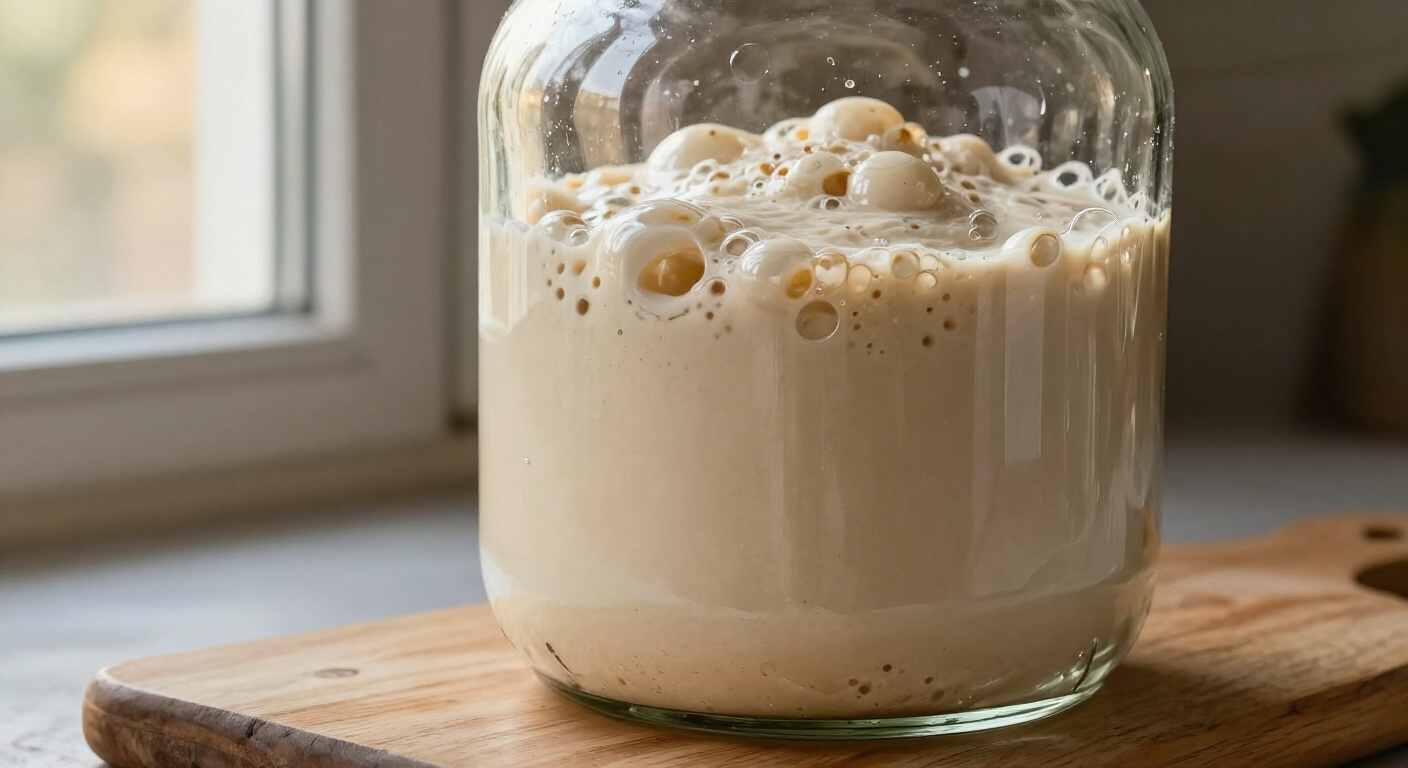
Sourdough starter recipe for beginners: 10 minutes of stirring gives you a tangy, bubbly jar that smells alive. Follow this easy week-long guide.
Lift the lid on this sourdough starter recipe for beginners and a tangy, yeasty perfume rushes out. About ten minutes of stirring and a week of patience give you a bubbly, domed starter. Perfect for a lazy weekend project.
Why This Recipe Works
• Whole wheat jump-starts the wild yeast: Stone-ground whole wheat carries more bran and native microbes. That gives your first wild colony a rich meal to work with.
• Lukewarm water wakes microbes gently: Water at 80°F / 27°C sits in the sweet spot where wild yeast and bacteria multiply fast. Hotter water can stun or kill them.
• Daily feedings dilute acids and refresh food: Each fresh spoonful of all-purpose flour and water waters down the sour buildup. It also hands the colony clean sugars to eat.
• The float test proves trapped gas: Carbon dioxide gets caught in the thick paste and makes a spoonful buoyant. That lift is the same force that will raise your loaf later.
Ingredients You'll Need
Whole Wheat Flour: Stone-ground whole wheat keeps the bran and germ, which carry the wild yeast and bacteria that start your starter. It gives that first colony a rich, nutty meal. No stone-ground? Rye flour is a good swap and ferments just as eagerly.
Unbleached All-Purpose Flour: This is the daily food for your starter from day 2 onward. It gives the colony clean, easy sugars, so it stays lively through every feeding. Bread flour works as a substitute, though your starter may turn out a little stiffer.
Filtered Water: Lukewarm water at 80°F / 27°C wakes the microbes gently and helps the flour form a smooth paste. Chlorine in tap water can slow wild yeast, so filtering matters. Bottled spring water works well, or you can leave tap water out overnight so the chlorine fades.


Ingredients You'd Need
Stir whole wheat and all-purpose flour with filtered water, then feed the jar daily for about a week until it bubbles and floats. Even if you've never kept a jar alive before, a bubbly, tangy starter is well within your reach.

- Stir 60 g (about ½ cup) stone-ground whole wheat flour with 60 g filtered water at 80°F / 27°C in a clean glass jar until a thick, pale, smooth paste forms, about 1 minute at 75°F / 24°C.

- Cover the jar loosely and rest it until a few tiny bubbles dot the paste and it smells faintly sour, 24-48 hours at 75°F / 24°C.

- On day 2, stir 60 g (about ½ cup) unbleached all-purpose flour and 60 g filtered water at 80°F / 27°C into the paste until smooth and fully combined, about 1 minute at 75°F / 24°C.

- Repeat the same feeding on days 3 through 7, using 60 g all-purpose flour and 60 g water, until the starter rises, bubbles, and smells tangy, about 24 hours per feeding at 75°F / 24°C.

- Check the jar 6-8 hours after the day 7 feeding until the starter has doubled, domed with large bubbles, and smells pleasantly sour, 6-8 hours at 75°F / 24°C.

- Drop a teaspoon of the starter into a glass of water at 70°F / 21°C until it floats on the surface, about 1 minute at 70°F / 21°C.

Recipe Notes
• Storage: Keep the mature starter in the fridge for up to a month, feeding it once a week. Freezing weakens the wild colony, so skip it. No reheating needed; just let it warm on the counter for an hour.
• Key substitution: No stone-ground flour? Plain whole wheat works. Whole rye flour is even better. Swap it one-for-one by weight for a deeper, earthier tang.
• Make-ahead tip: Weigh the all-purpose flour into a sealed container up to a week early. Leave filtered water out overnight to lose its chill before feeding.
• Common mistake: Tossing the jar on day three because it smells sharp or gassy. Those early aromas are normal. Be patient, because the smell mellows as the colony settles.
Serving size: 1 portion · Calories: 45 · Total Fat: 0g · Saturated Fat: 0g · Carbs: 10g · Fiber: 1g · Sugar: 0g · Protein: 2g · Sodium: 0mg
Tips and Tricks
- Equipment: Pick a wide, clear glass jar: Glass lets you watch every bubble form. A wide mouth makes stirring easy and gives the starter room to double.

- Temperature precision: Check water at 80°F / 27°C: Use a thermometer, not your wrist. Water that is too hot can stun wild yeast, while cold water slows the bubbling.
- Common mistake: Scooping flour straight from the bag: Packed flour can weigh far more than the recipe calls for. Weigh your flour in grams so the paste stays thick and pale.
- Flavour upgrade: Swap 10% of the feed for whole rye: A spoonful of rye adds an earthy, deeper tang. Try it only after your starter floats, so the colony stays strong.
- Texture tip: Aim for a thick, smooth paste: Stir until no dry streaks remain, then stop. A thick paste traps gas better, so it rises higher and bubbles more.

Frequently Asked Questions
Can I use rye or all-purpose flour instead of whole wheat for the starter?
Yes, swap the 60 g stone-ground whole wheat for 60 g whole rye flour for a tangier, earthier starter. For a milder version, use 60 g unbleached all-purpose flour instead, though the first days may rise a little more slowly.
How long can I store the starter discard I remove during daily feedings?
Refrigerate discard in a covered jar for up to 7 days, and use it in pancakes or crackers within that window. To revive chilled discard before baking, feed it at 75°F / 24°C and wait 12 hours until bubbly.
Why won't my starter bubble by day four despite daily feedings?
A sluggish starter usually sits in a cold kitchen below 75°F / 24°C. Move the jar somewhere warm, like an oven with only the light on, and expect bubbles within 12 hours of the next feeding.
What to Serve With This Starter Bread
- Whipped Lemon Ricotta: Cool, creamy cheese softens every chewy bite, while lemon zest cuts through the tangy crumb.
- Cucumber Dill Salad: Crisp cucumber and a sharp vinegar dressing add crunch and brightness beside soft, tender bread.
- Marinated Olives: Briny, salty olives give a bold contrast to the mild sourness of the crust.
- Sharp Cheddar and Pear Slices: Nutty cheddar and juicy, sweet pear balance the bread's tang with a creamy, fruity bite.

Bubbly Whole Wheat Sourdough Starter Recipe for Beginners
Side Dish / American
- Prep
- 10 min
- Total
- 10 min
- Servings
- 8
- Calories
- 45 kcal
Ingredients
- 60 g (about ½ cup) whole wheat flour, stone-ground if you can find it
- 360 g (about 3 cups) unbleached all-purpose flour, for daily feedings
- 420 g (about 1¾ cups) filtered water, lukewarm (about 80°F / 27°C)
Instructions
- Stir 60 g (about ½ cup) stone-ground whole wheat flour with 60 g filtered water at 80°F / 27°C in a clean glass jar until a thick, pale, smooth paste forms, about 1 minute at 75°F / 24°C.
- Cover the jar loosely and rest it until a few tiny bubbles dot the paste and it smells faintly sour, 24-48 hours at 75°F / 24°C.
- On day 2, stir 60 g (about ½ cup) unbleached all-purpose flour and 60 g filtered water at 80°F / 27°C into the paste until smooth and fully combined, about 1 minute at 75°F / 24°C.
- Repeat the same feeding on days 3 through 7, using 60 g all-purpose flour and 60 g water, until the starter rises, bubbles, and smells tangy, about 24 hours per feeding at 75°F / 24°C.
- Check the jar 6-8 hours after the day 7 feeding until the starter has doubled, domed with large bubbles, and smells pleasantly sour, 6-8 hours at 75°F / 24°C.
- Drop a teaspoon of the starter into a glass of water at 70°F / 21°C until it floats on the surface, about 1 minute at 70°F / 21°C.
Share this article
About the author
Theo Lindqvist
Theo bakes at five in the morning because anxiety wakes him anyway, and kneading is the one thing that makes his hands stop shaking. His first loaves were bricks and he cried over them. Now he scores a boule in the blue dark and feels, for an hour, completely at peace.